
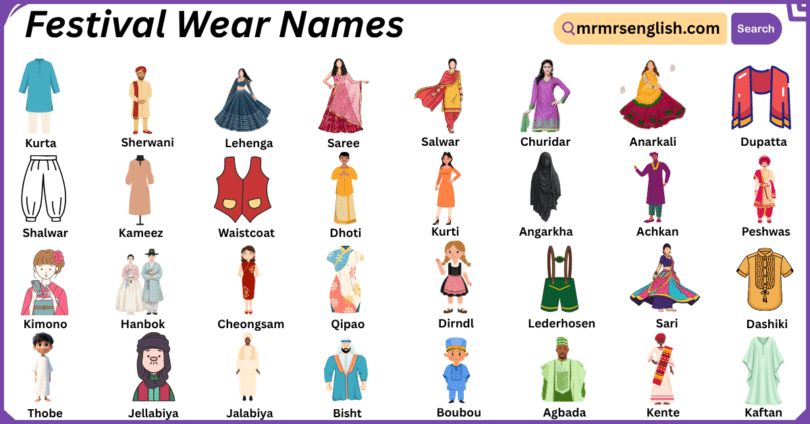
Festival wear includes special clothing and outfits worn during cultural, religious, traditional, and seasonal celebrations around the world. It comes in many styles, including dresses, suits, kurtas, sarees, sherwanis, gowns, and traditional costumes, each suitable for different festivals and occasions. Learning the names of festival wear is a useful way to improve English vocabulary while becoming familiar with clothing styles used during celebrations. In this article, you will learn festival wear names in English with clear pictures, helping kids, students, teachers, shoppers, travelers, beginners, and English learners easily identify, understand, remember, and use these clothing names with confidence.
Table of Contents
ToggleList of Festival Wear with Names
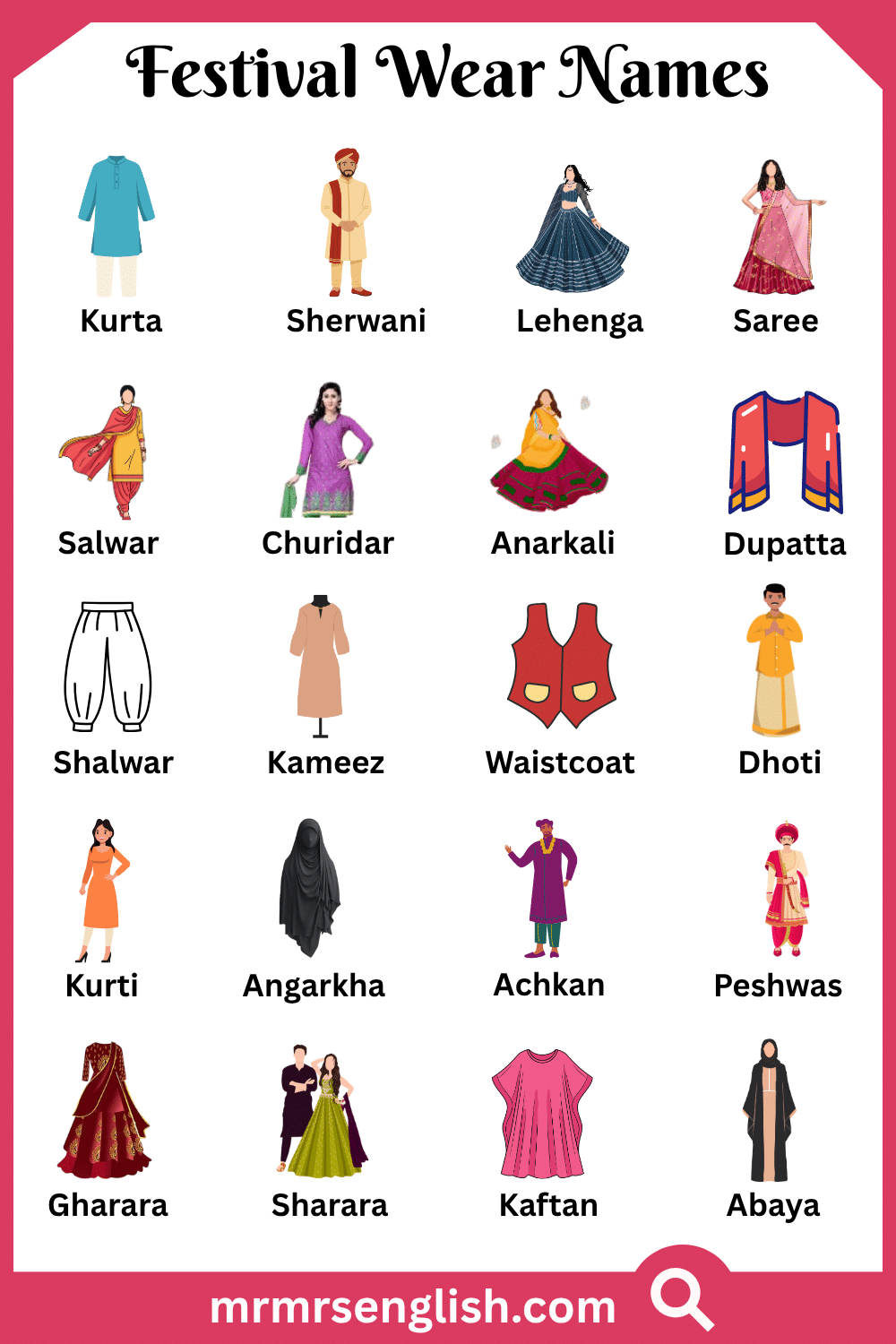
- Kurta
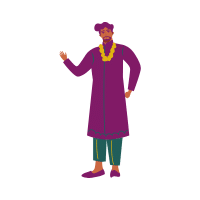
- Sherwani
- Lehenga
- Saree
- Salwar
- Churidar
- Anarkali
- Dupatta
- Shalwar
- Kameez
- Waistcoat
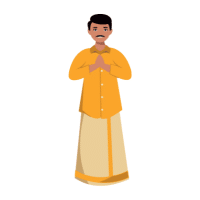
- Dhoti
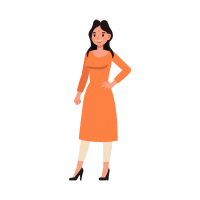
- Kurti
- Angarkha
- Achkan
- Peshwas
- Gharara
- Sharara
- Kaftan
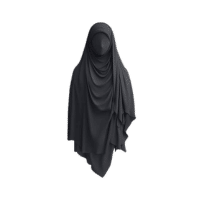
- Abaya
Names of Festival Wear with Pictures
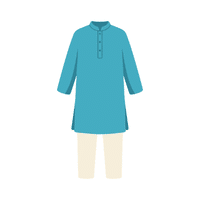
- Kurta
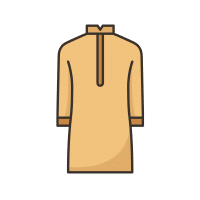
A comfortable long shirt commonly worn during festivals, often paired with trousers and decorated with embroidery or colorful patterns.

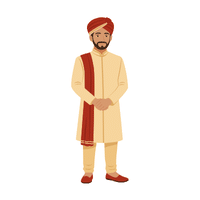
- Sherwani
A formal long coat traditionally worn for celebrations, featuring a fitted shape and often decorated with detailed embroidery.
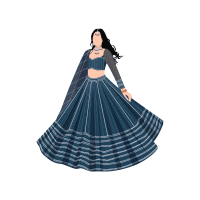
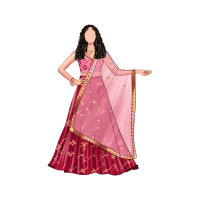
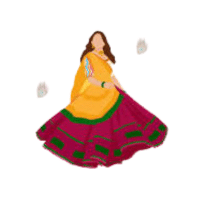
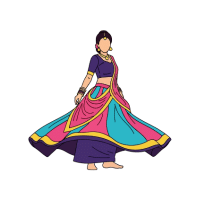
- Lehenga
A festive outfit consisting of a long skirt, matching blouse, and scarf, usually decorated with colorful patterns or embroidery.
- Saree
A long piece of fabric wrapped around the body and paired with a blouse, creating an elegant traditional festival outfit.
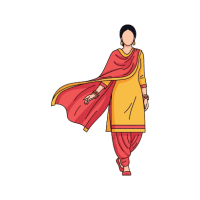
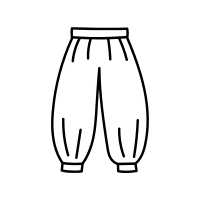
- Salwar
Loose-fitting trousers traditionally worn for festive occasions, usually paired with a matching tunic or long shirt.
- Churidar
Slim-fitting trousers with extra fabric gathered around the ankles, commonly worn with long festive tunics or traditional dresses.
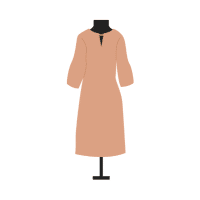
- Anarkali
A long, flowing dress with a fitted upper section and a wide, flared lower portion, popular for festive occasions.
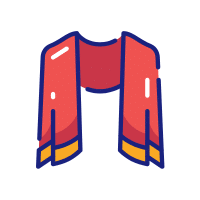
- Dupatta
A long decorative scarf worn with traditional outfits, usually placed over the shoulders or around the head.
- Shalwar
Loose traditional trousers with a comfortable shape, commonly paired with a kameez for cultural celebrations and festivals.
- Kameez
A long tunic or shirt worn with traditional trousers, often featuring embroidery, patterns, or decorative fabric for festivals.
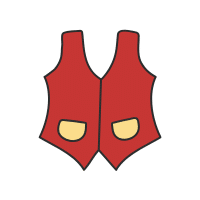
- Waistcoat
A sleeveless garment worn over a shirt or kurta, often adding a smart and formal touch to festive clothing.
- Dhoti
A traditional garment made from a long piece of cloth wrapped around the legs and waist in a distinctive style.
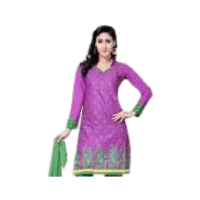
- Kurti
A shorter version of the kurta, commonly worn with trousers, skirts, or traditional bottoms during casual and festive events.
- Angarkha
A traditional wrap-style garment with overlapping front panels, often decorated with embroidery and worn during cultural celebrations.
- Achkan
A long, fitted traditional coat usually worn for formal festivals and celebrations, often featuring buttons and decorative embroidery.
- Peshwas
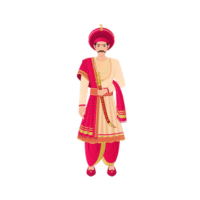
A long, flowing traditional dress with a fitted upper body and wide skirt, commonly decorated for special festive occasions.
- Gharara
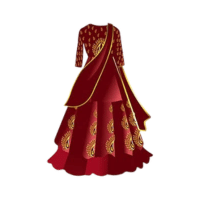
A traditional outfit featuring wide, flared trousers, usually worn with a short top and decorative scarf for celebrations.
- Sharara
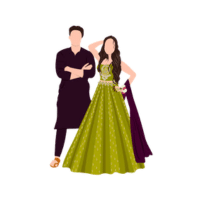
A festive outfit with wide-legged trousers and a matching top, often decorated with embroidery, sequins, or colorful designs.
- Kaftan
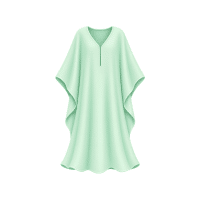
A loose, flowing garment with wide sleeves, often made from colorful fabric and worn for relaxed or festive gatherings.
- Abaya
A long, loose outer garment commonly worn over other clothes, often featuring simple designs, embroidery, or decorative details.


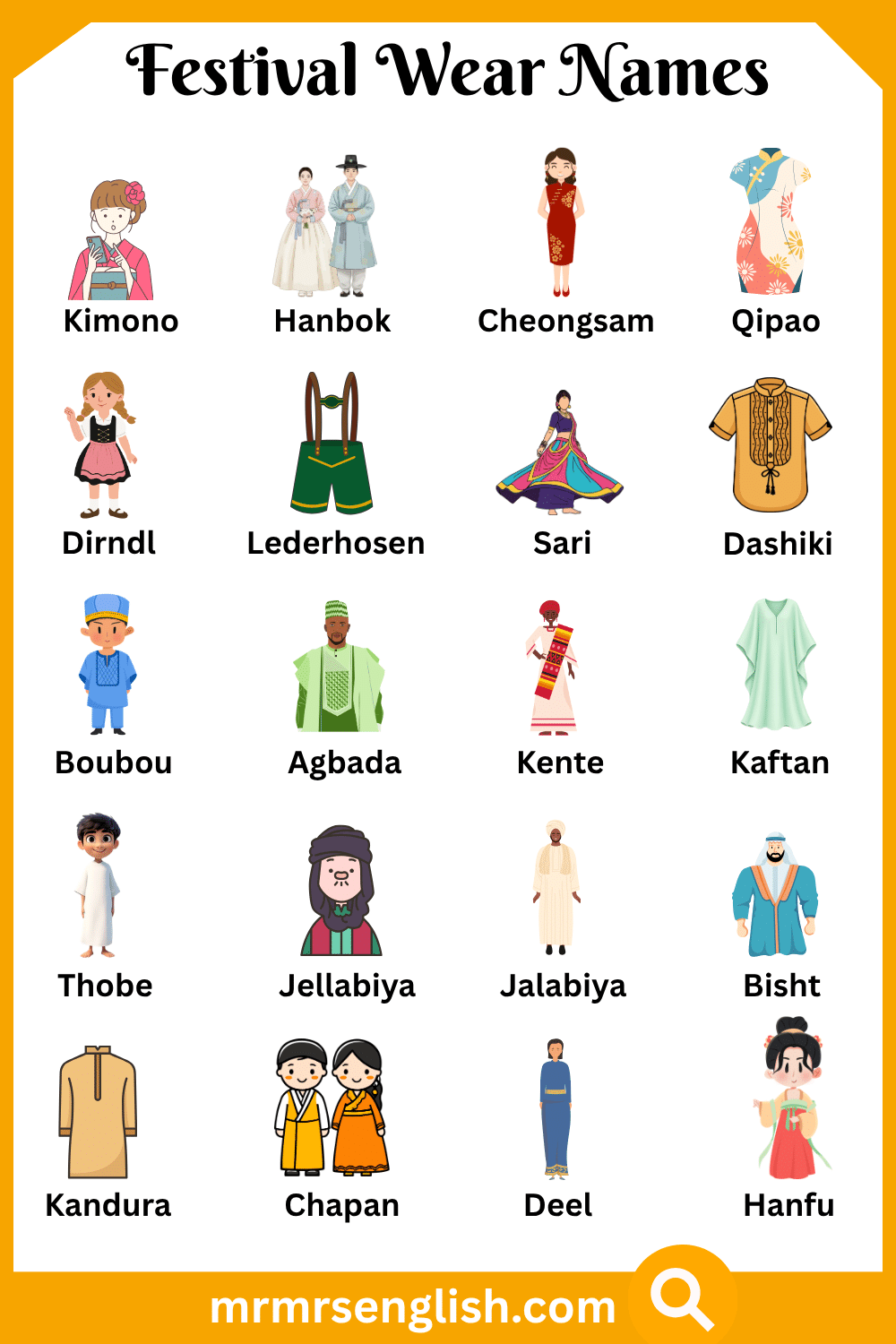
20 Festival Wear with Names
- Kimono
- Hanbok
- Cheongsam
- Qipao
- Dirndl
- Lederhosen
- Sari
- Dashiki
- Boubou
- Agbada
- Kente
- Kaftan
- Thobe
- Jellabiya
- Jalabiya
- Bisht
- Kandura
- Chapan
- Deel
- Hanfu
Traditional Festival Wear with Pictures
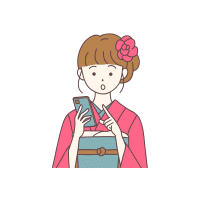
- Kimono
A traditional Japanese robe with wide sleeves and a wrapped front, usually secured with a belt called an obi.
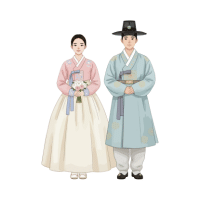
- Hanbok
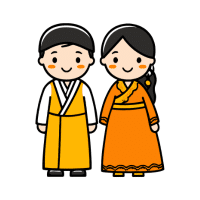
A traditional Korean outfit featuring a short jacket and full skirt or loose trousers, often worn during important celebrations.
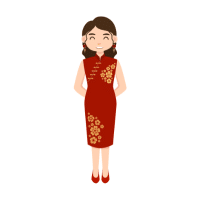
- Cheongsam
A fitted Chinese dress with a high collar and distinctive front closure, often made from elegant patterned fabric.
- Qipao
A traditional Chinese dress with a close-fitting shape, high collar, and decorative fastenings, commonly worn for special occasions.
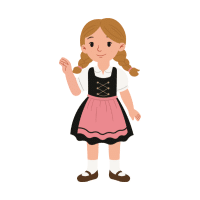
- Dirndl
A traditional Alpine outfit featuring a fitted bodice, blouse, and full skirt, often worn during regional festivals and celebrations.
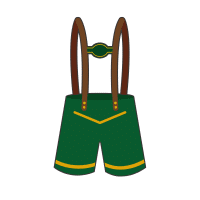
- Lederhosen
Traditional short or knee-length leather trousers commonly associated with Alpine celebrations, often paired with shirts and suspenders.
- Sari
A traditional South Asian garment made from a long fabric wrapped around the body, creating a graceful and colorful appearance.
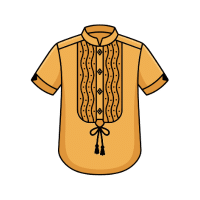
- Dashiki
A loose, colorful African shirt often featuring bold patterns and embroidery, commonly worn during cultural celebrations and festivals.
- Boubou
A loose, flowing West African robe traditionally made from colorful fabric and often decorated with detailed embroidery.
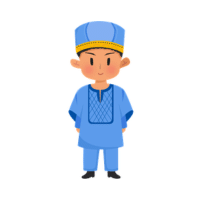
- Agbada
A wide, flowing West African robe worn over trousers and a shirt, commonly chosen for important celebrations and ceremonies.
- Kente
A brightly patterned woven fabric from Ghana, often used to create festive clothing for cultural events and important celebrations.
- Kaftan
A loose-fitting robe with wide sleeves, commonly made from decorative fabric and worn during celebrations, gatherings, and special occasions.
- Thobe
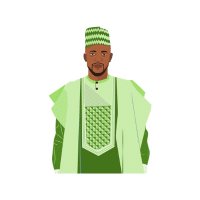
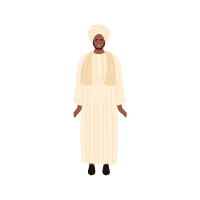
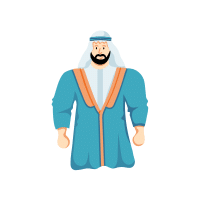
A long, ankle-length garment commonly worn by men in several Arab cultures, especially during religious and festive occasions.
- Jellabiya
A loose, full-length robe traditionally worn in parts of North Africa and the Middle East, especially during celebrations.
- Jalabiya
A flowing traditional robe with long sleeves, commonly worn in Arab regions for everyday comfort and festive gatherings.
- Bisht
A formal outer cloak traditionally worn over other clothing, especially during important ceremonies, celebrations, and formal occasions.
- Kandura
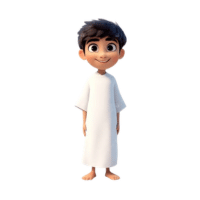
A long, loose garment commonly worn by men in the Gulf region, particularly during cultural and festive events.
- Chapan
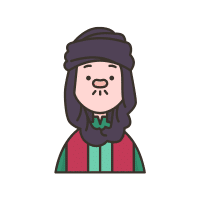
A long traditional coat worn across Central Asia, often made with colorful fabrics and used during cultural celebrations.
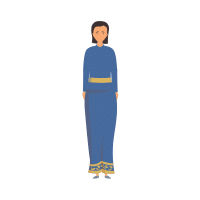
- Deel
A traditional Mongolian garment with a long robe-like shape, commonly worn during cultural festivals and special occasions.
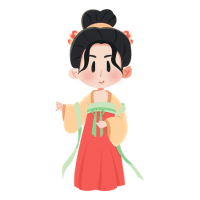
- Hanfu
Traditional Chinese clothing featuring flowing layers, wide sleeves, and elegant fabrics, commonly worn for cultural celebrations and ceremonies.


Traditional Festival Wear with Pictures
Learn more Helpful Articles


Leave a Comment