
Learning English through sentence structures is an effective way to develop speaking skills and understand how the language works in real conversations. Each lesson introduces useful patterns that help learners create correct and meaningful sentences with confidence. By practicing these structures regularly, you can improve your grammar, vocabulary, and fluency at the same time. In this Lesson 19 of the English Speaking Course by Structures, you will learn practical sentence patterns and examples that will help you speak English more naturally and communicate effectively in everyday situations.
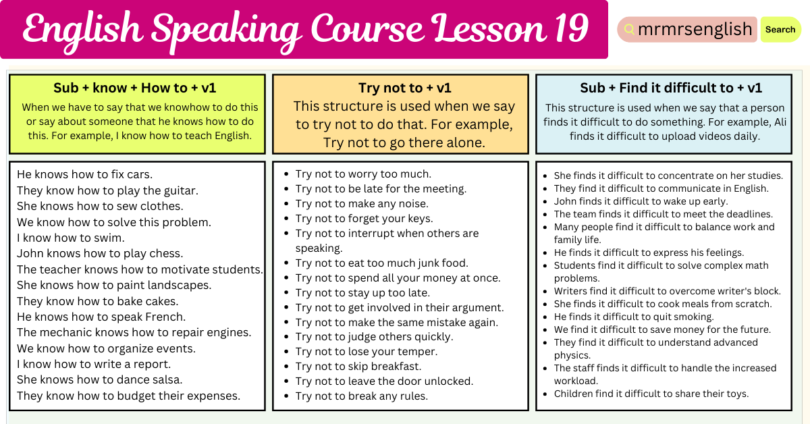
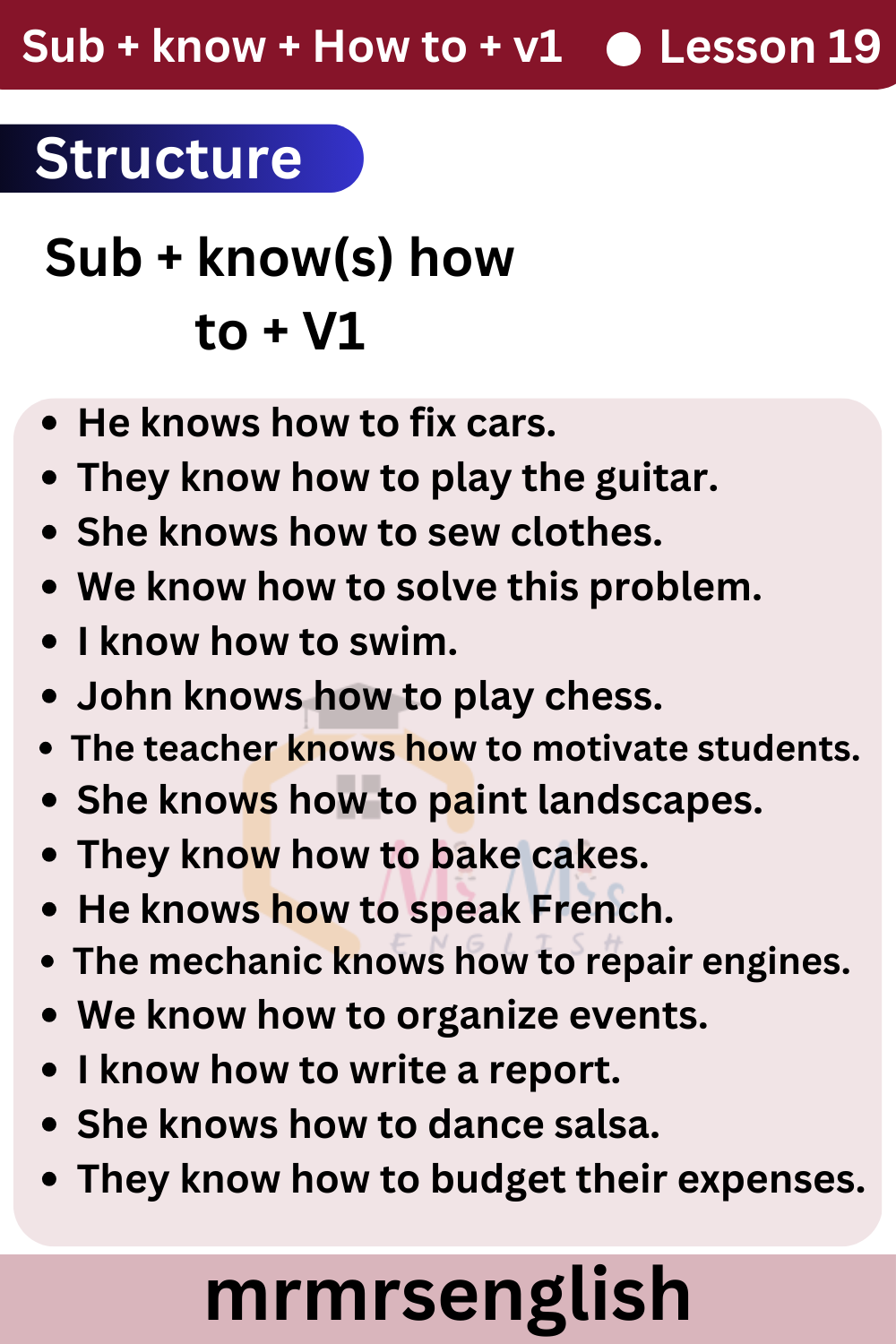
Sub + know + How to + v1
When we have to say that we know how to do this or say about someone that he knows how to do this. For example, I know how to teach English. She knows how to cook biryani.
Structure: Sub + know(s) how to + V1
- He knows how to fix cars.
- They know how to play the guitar.
- She knows how to sew clothes.
- We know how to solve this problem.
- I know how to swim.
- John knows how to play chess.
- The teacher knows how to motivate students.
- She knows how to paint landscapes.
- They know how to bake cakes.
- He knows how to speak French.
- The mechanic knows how to repair engines.
- We know how to organize events.
- I know how to write a report.
- She knows how to dance salsa.
- They know how to budget their expenses.
English Speaking Course Lesson 19 by Structures
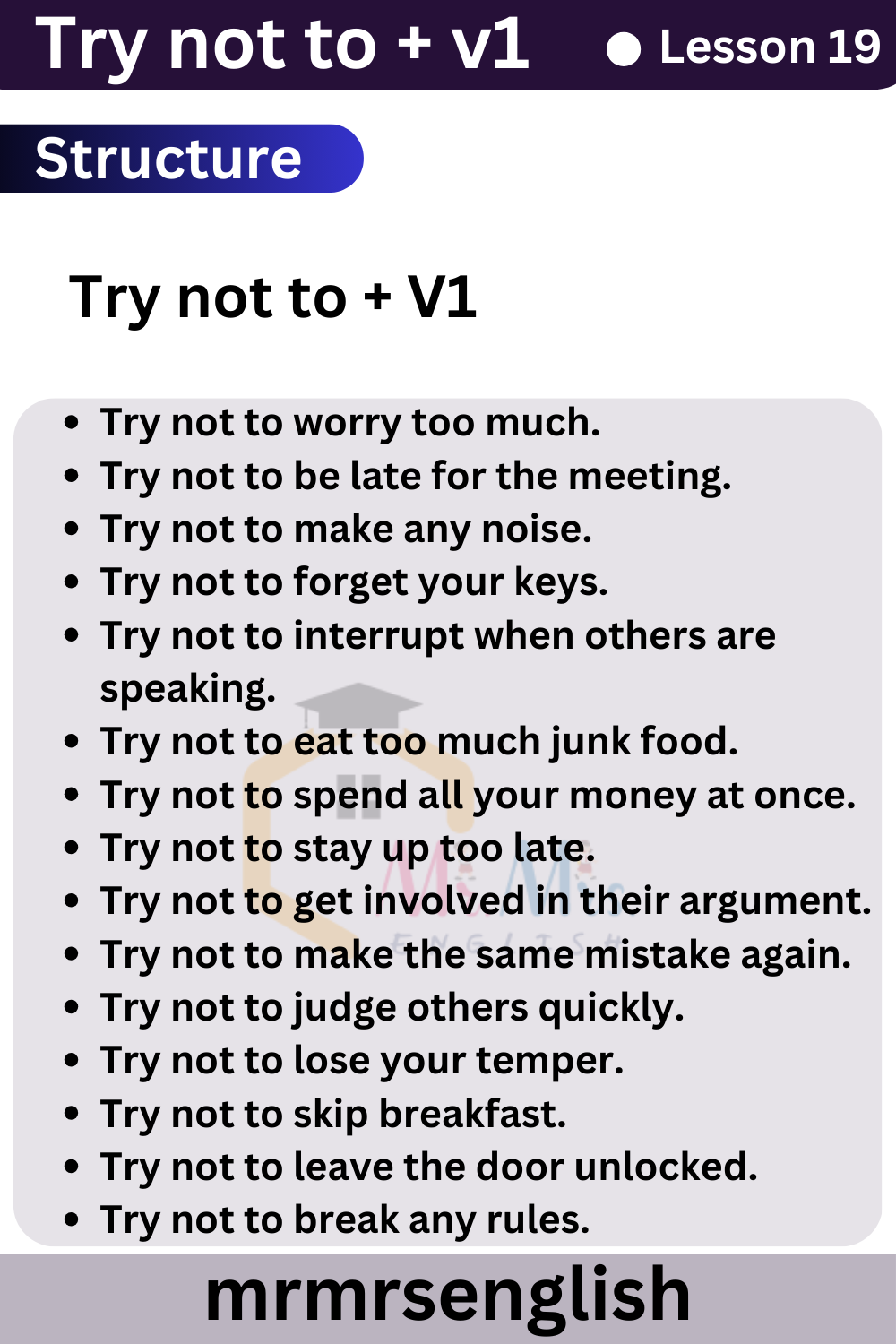
Try not to + v1
This structure is used when we say to try not to do that. For example, Try not to go there alone. Try not to tell her about us.
Structure: Try not to + V1
- Try not to worry too much.
- Try not to be late for the meeting.
- Try not to make any noise.
- Try not to forget your keys.
- Try not to interrupt when others are speaking.
- Try not to eat too much junk food.
- Try not to spend all your money at once.
- Try not to stay up too late.
- Try not to get involved in their argument.
- Try not to make the same mistake again.
- Try not to judge others quickly.
- Try not to lose your temper.
- Try not to skip breakfast.
- Try not to leave the door unlocked.
- Try not to break any rules.
English Speaking Course Lesson 19 by Structures
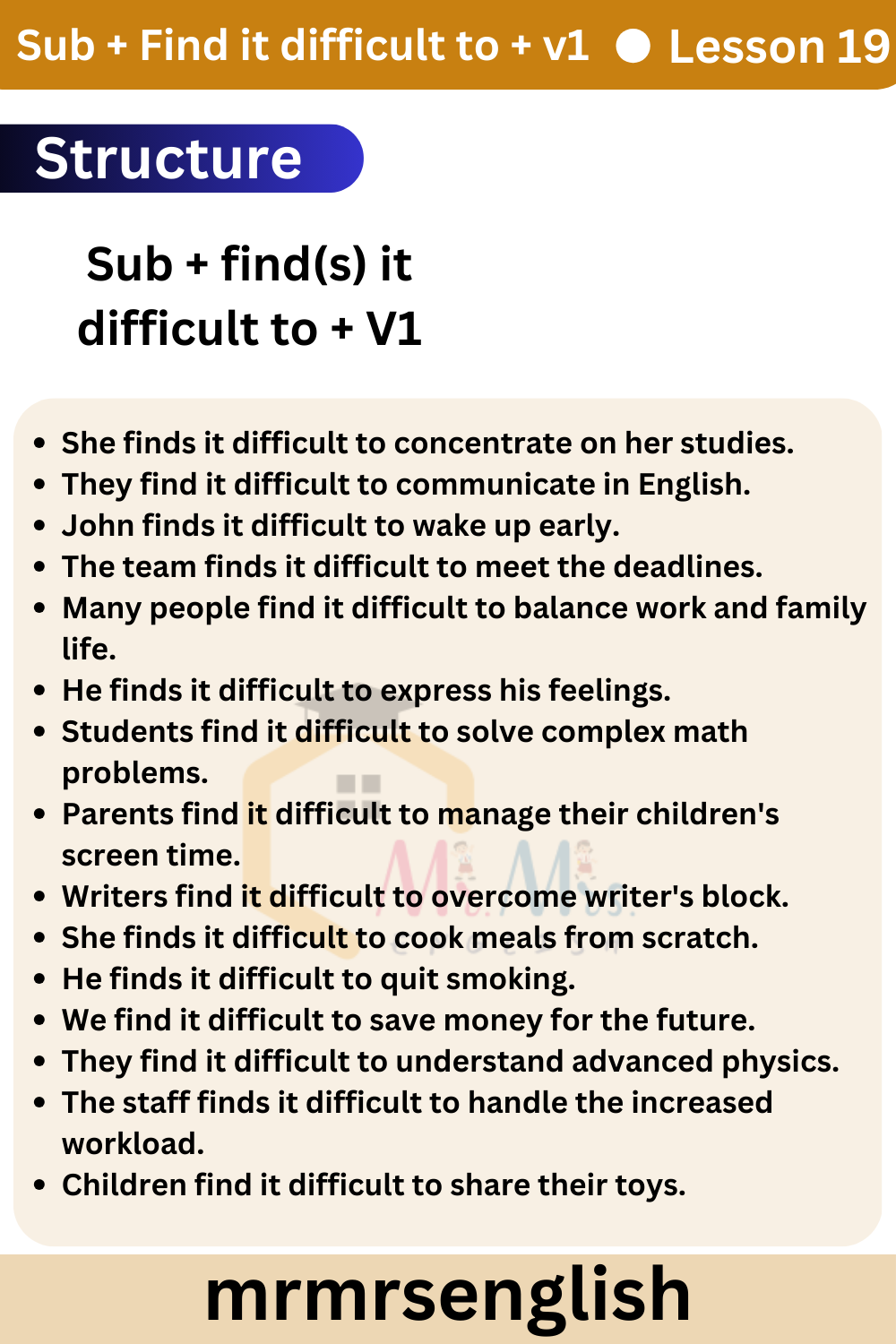
Sub + Find it difficult to + v1
This structure is used when we say that a person finds it difficult to do something. For example, Ali finds it difficult to upload videos daily. We found it difficult to train them.
Structure: Sub + find(s) it difficult to + V1
- She finds it difficult to concentrate on her studies.
- They find it difficult to communicate in English.
- John finds it difficult to wake up early.
- The team finds it difficult to meet the deadlines.
- Many people find it difficult to balance work and family life.
- He finds it difficult to express his feelings.
- Students find it difficult to solve complex math problems.
- Parents find it difficult to manage their children’s screen time.
- Writers find it difficult to overcome writer’s block.
- She finds it difficult to cook meals from scratch.
- He finds it difficult to quit smoking.
- We find it difficult to save money for the future.
- They find it difficult to understand advanced physics.
- The staff finds it difficult to handle the increased workload.
- Children find it difficult to share their toys.
English Speaking Course Lesson 19 by Structures

Leave a Comment