
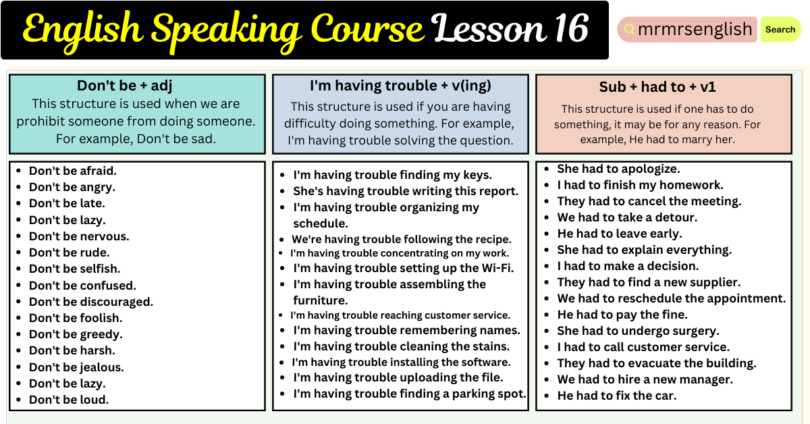
Learning English through sentence structures is an effective way to develop strong speaking skills and understand how sentences are formed in real conversations. Sentence patterns help learners express ideas clearly and confidently without relying on difficult grammar rules. Regular practice of these structures improves fluency, expands vocabulary, and makes everyday communication easier. Each lesson introduces practical patterns that can be used in different situations. In this Lesson 16 of the English Speaking Course by Structures, you will learn useful sentence structures and examples that will help you speak English more naturally and communicate with greater confidence in daily life.
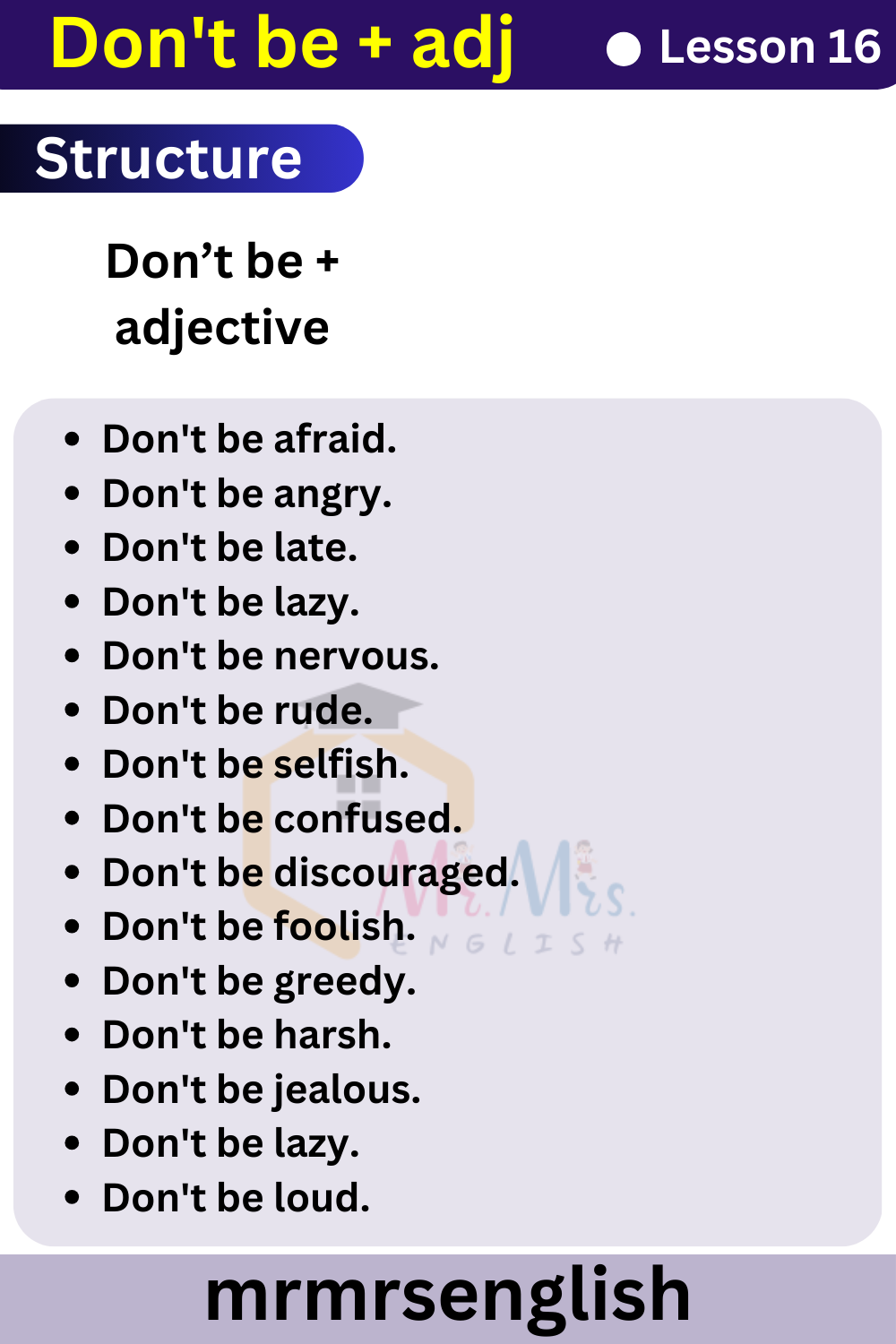
Don’t be + adj
This structure is used when we prohibit someone from doing something. For example, Don’t be sad. Don’t be foolish. Don’t be shy.
Structure:
- Don’t be afraid.
- Don’t be angry.
- Don’t be late.
- Don’t be lazy.
- Don’t be nervous.
- Don’t be rude.
- Don’t be selfish.
- Don’t be confused.
- Don’t be discouraged.
- Don’t be foolish.
- Don’t be greedy.
- Don’t be harsh.
- Don’t be jealous.
- Don’t be lazy.
- Don’t be loud.
English Speaking Course Lesson 16 by Structures
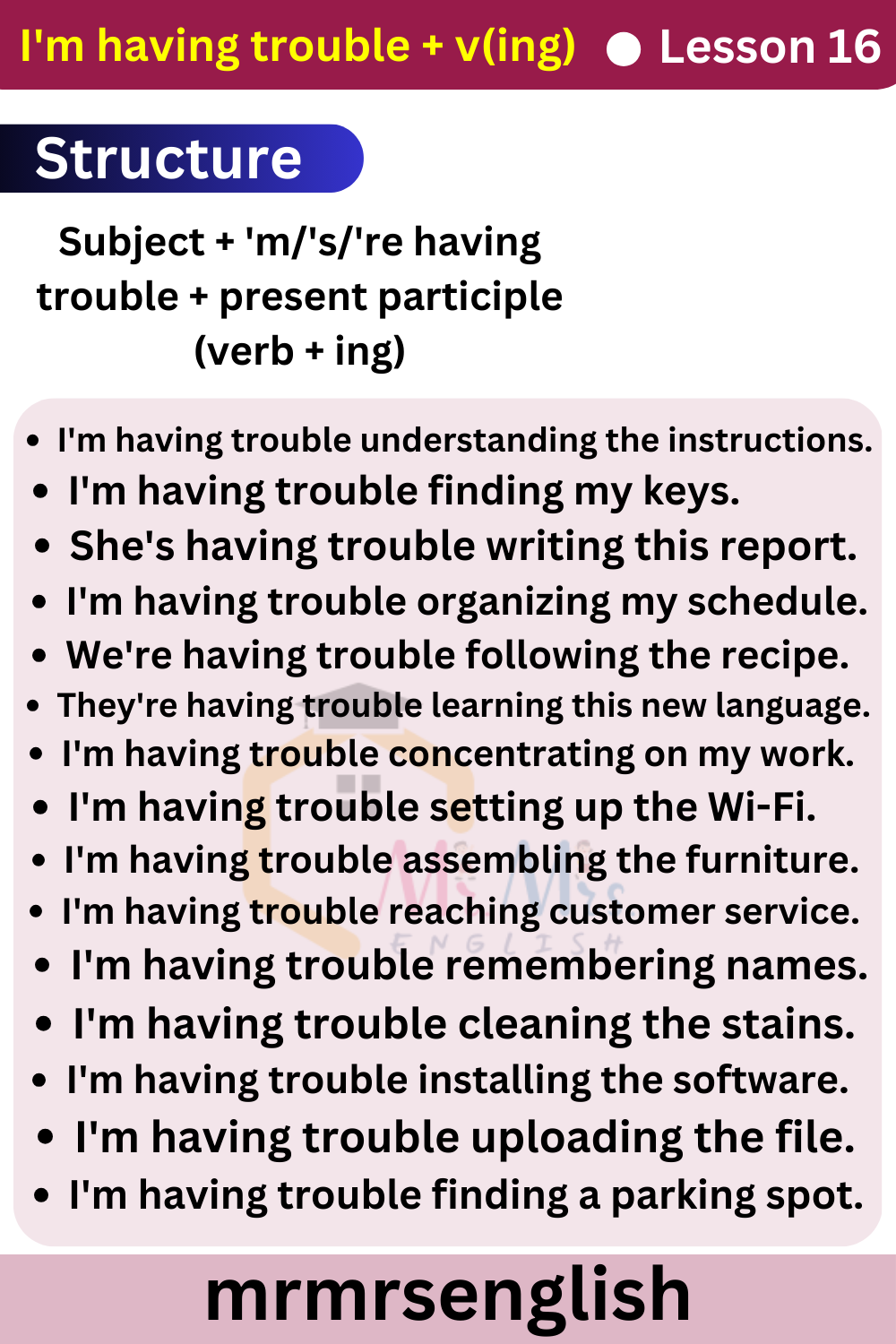
I’m having trouble + v(ing)
This structure is used if you are having difficulty doing something. For example, I’m having trouble solving the question. she’s having trouble parking the car. they’re having trouble loading the luggage.
Structure: Subject + ‘m/’s/’re having trouble + present participle (verb + ing)
- I’m having trouble understanding the instructions.
- I’m having trouble finding my keys.
- She’s having trouble writing this report.
- I’m having trouble organizing my schedule.
- We’re having trouble following the recipe.
- They’re having trouble learning this new language.
- I’m having trouble concentrating on my work.
- I’m having trouble setting up the Wi-Fi.
- I’m having trouble assembling the furniture.
- I’m having trouble reaching customer service.
- I’m having trouble remembering names.
- I’m having trouble cleaning the stains.
- I’m having trouble installing the software.
- I’m having trouble uploading the file.
- I’m having trouble finding a parking spot.
English Speaking Course Lesson 16 by Structures
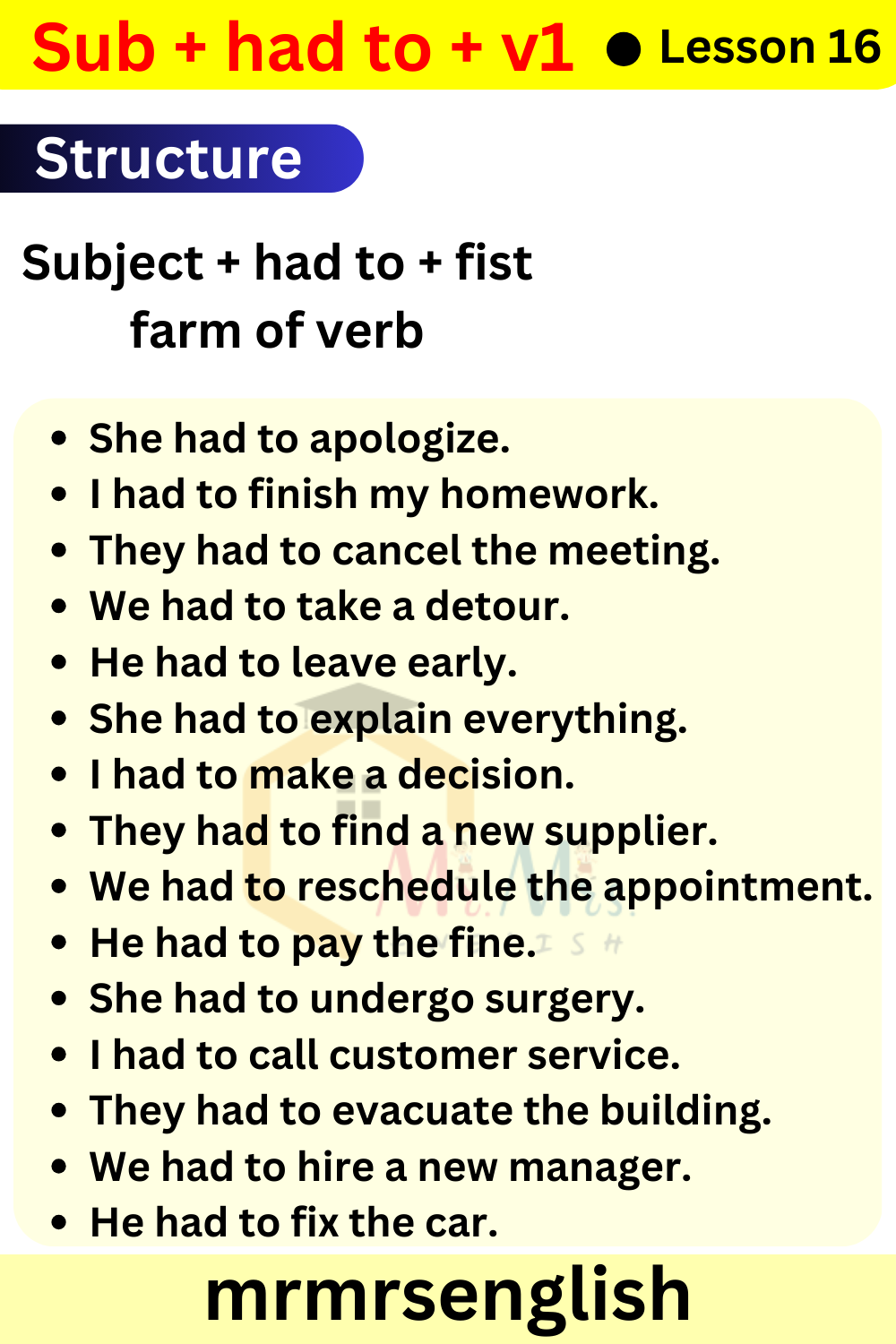
Sub + had to + v1
This structure is used if one has to do something, it may be for any reason. For example, He had to marry her. they had to move to another city. we had to admit him.
Structure: Subject + had to + fist farm of verb
- She had to apologize.
- I had to finish my homework.
- They had to cancel the meeting.
- We had to take a detour.
- He had to leave early.
- She had to explain everything.
- I had to make a decision.
- They had to find a new supplier.
- We had to reschedule the appointment.
- He had to pay the fine.
- She had to undergo surgery.
- I had to call customer service.
- They had to evacuate the building.
- We had to hire a new manager.
- He had to fix the car.
English Speaking Course Lesson 16 by Structures
Learn more helpful articles

Leave a Comment