
The English language is full of interesting expressions that make communication more meaningful and expressive. Some words are chosen to sound polite, while others are deliberately harsh or offensive to show criticism, anger, humor, or strong emotions. Understanding dysphemism in English helps students and English learners recognize how these expressions are used in everyday conversations, literature, movies, and the media. In this article, you will learn its meaning, explore simple and practical examples, understand its common uses, and discover how to identify dysphemism correctly in different contexts.
What Is Dysphemism in English?
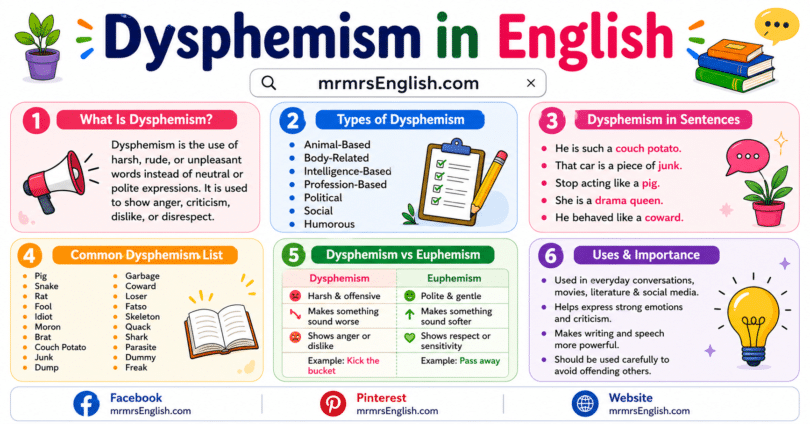
Dysphemism is the use of a negative or offensive expression in place of a neutral or pleasant one.
For example:
- Neutral: Old person
- Dysphemism: Old fossil
Another example:
- Neutral: Police officer
- Dysphemism: Pig (offensive slang)
The purpose of dysphemism is usually to make someone or something sound worse than it really is.
Pronunciation of Dysphemism
| Word | Pronunciation |
|---|---|
| Dysphemism | dis-FEE-miz-um |
Simple Meaning of Dysphemism
In simple words, dysphemism means replacing a normal or polite word with a rude, insulting, or unpleasant one.
It is the opposite of using polite language.
Main Features of Dysphemism
- Uses harsh or negative words
- Expresses anger or dislike
- Can be insulting or disrespectful
- Often used in arguments
- Common in movies, politics, and social media
- May create humor or sarcasm
- Should be used carefully because it can offend people
Why Do People Use Dysphemism?
People use dysphemism for different reasons.
To Show Anger
Someone may use rude words when they are upset.
Example: “That thief is nothing but a rat.”
To Criticize Someone
People use dysphemism to make criticism stronger.
Example: “He is a lazy bum.”
To Insult Others
Sometimes people intentionally choose offensive words to hurt someone’s feelings.
Example: “You fool!”
To Add Humor
Friends sometimes jokingly use mild dysphemisms.
Example: “You couch potato!”
To Express Strong Opinions
Writers and speakers may use dysphemism to emphasize negative feelings.
Types of Dysphemism
Animal-Based Dysphemism
People compare others to animals with negative meanings.
Examples:
- Pig
- Rat
- Snake
- Donkey
- Hyena
Example sentence: “He acted like a snake.”
Body-Related Dysphemism
These expressions criticize someone’s appearance or physical condition.
Examples:
- Fatso
- Skeleton
- Four-eyes
Intelligence-Based Dysphemism
These words insult someone’s intelligence.
Examples:
- Idiot
- Moron
- Dummy
- Blockhead
Profession-Based Dysphemism
Some professions receive offensive nicknames.
Examples:
- Pig (police officer)
- Shark (dishonest lawyer)
Political Dysphemism
Politicians sometimes use negative language against opponents.
Example: “That policy is a disaster.”
Social Dysphemism
Used to insult social groups or individuals.
Example: “That greedy parasite.”
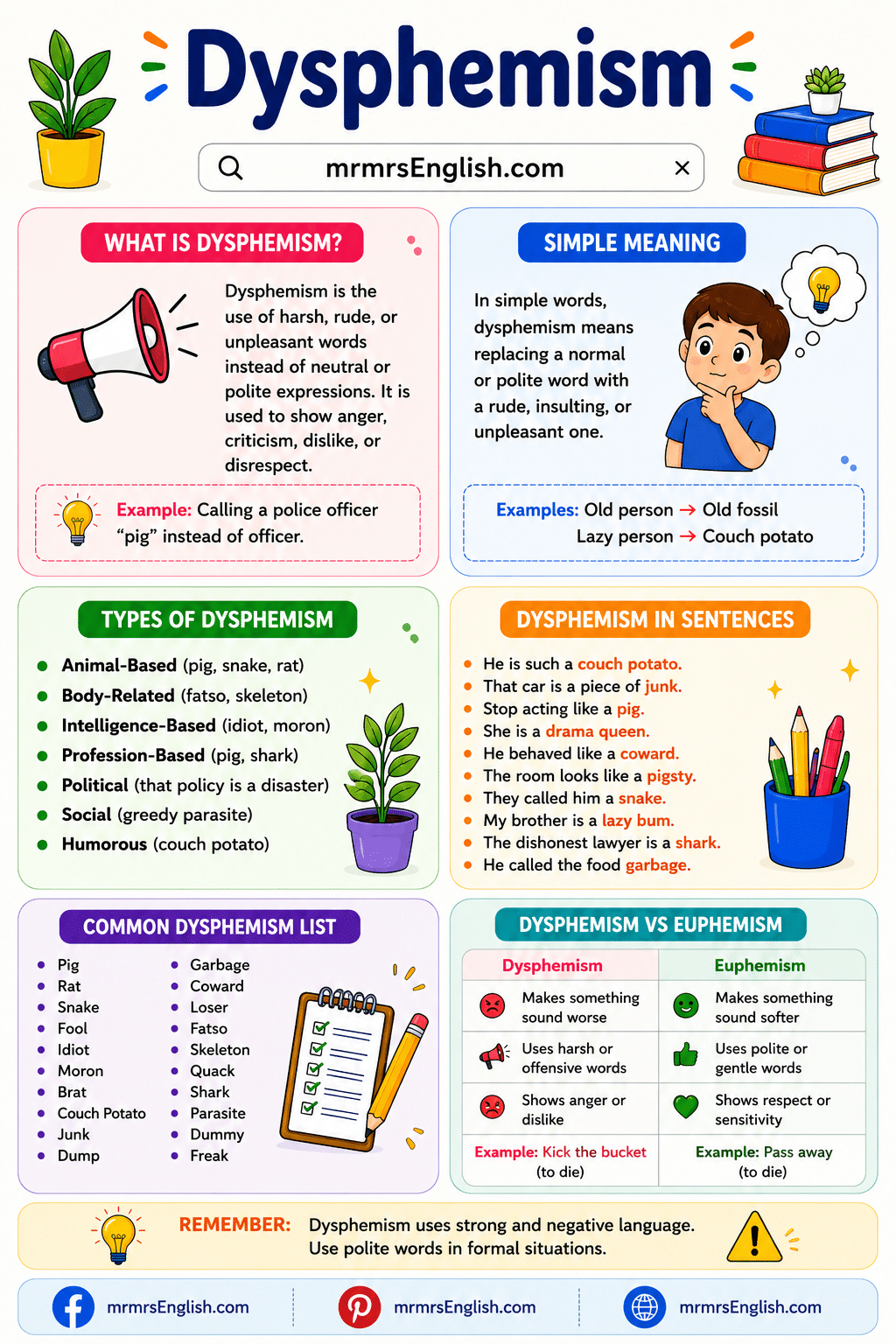
Types of Dysphemism with Example Sentences
Dysphemism Examples in Everyday English
| Neutral Expression | Dysphemism |
|---|---|
| Elderly person | Old fossil |
| Police officer | Pig |
| Very thin person | Skeleton |
| Lazy person | Couch potato |
| Child | Brat |
| House | Dump |
| Cheap car | Junk |
| Food | Garbage |
| Doctor | Quack (dishonest doctor) |
| Businessman | Shark |
Dysphemism Example Sentences
- He called the old car junk.
- Stop acting like a brat.
- That restaurant serves garbage.
- The room looks like a pigsty.
- Don’t be such a coward.
- My brother is a couch potato on weekends.
- She described the building as a dump.
- They called him a snake because he betrayed his friends.
- He behaved like a pig at the dinner table.
- The dishonest lawyer was called a shark.
Dysphemism in Literature
Authors use dysphemism to:
- Build strong characters
- Show conflict
- Express anger
- Create realistic dialogue
- Add emotional impact
Many novels, dramas, and plays include dysphemism because people do not always speak politely in real life.
Dysphemism in Daily Conversation
People sometimes use dysphemism during:
- Arguments
- Sports discussions
- Political debates
- Social media comments
- Comedy shows
- Movies
- Television dramas
However, it is not suitable for formal communication.
Dysphemism in Media
News reporters usually avoid dysphemism because they aim to remain neutral.
However, it appears frequently in:
- Opinion articles
- Political speeches
- Comedy programs
- Online comments
- Internet memes
Difference Between Dysphemism, Euphemism, and Orthophemism
| Feature | Dysphemism | Euphemism | Orthophemism |
|---|---|---|---|
| Tone | Harsh | Polite | Neutral |
| Purpose | Insult or criticize | Soften meaning | State facts clearly |
| Emotion | Negative | Gentle | Objective |
| Example for “die” | Kick the bucket (can be disrespectful depending on context) | Pass away | Die |
Dysphemism vs Euphemism
| Dysphemism | Euphemism |
|---|---|
| Makes something sound worse | Makes something sound gentler |
| Often offensive | Usually polite |
| Shows anger or dislike | Shows respect or sensitivity |
| May insult people | Avoids hurting feelings |
Advantages of Understanding Dysphemism
Learning dysphemism helps students:
- Understand spoken English better
- Recognize emotional language
- Improve reading comprehension
- Identify sarcasm and insults
- Understand novels and movies
- Avoid using offensive words unintentionally
When Should You Avoid Dysphemism?
Avoid dysphemism in:
- School assignments
- Business emails
- Job interviews
- Academic writing
- Professional meetings
- Formal speeches
- Customer service
- Respectful conversations
Using polite language creates better communication and avoids unnecessary conflict.
List of Dysphemism Words
- Pig
- Rat
- Snake
- Brat
- Fool
- Idiot
- Moron
- Dummy
- Fatso
- Skeleton
- Coward
- Loser
- Bum
- Shark
- Quack
- Junk
- Dump
- Garbage
- Parasite
- Freak
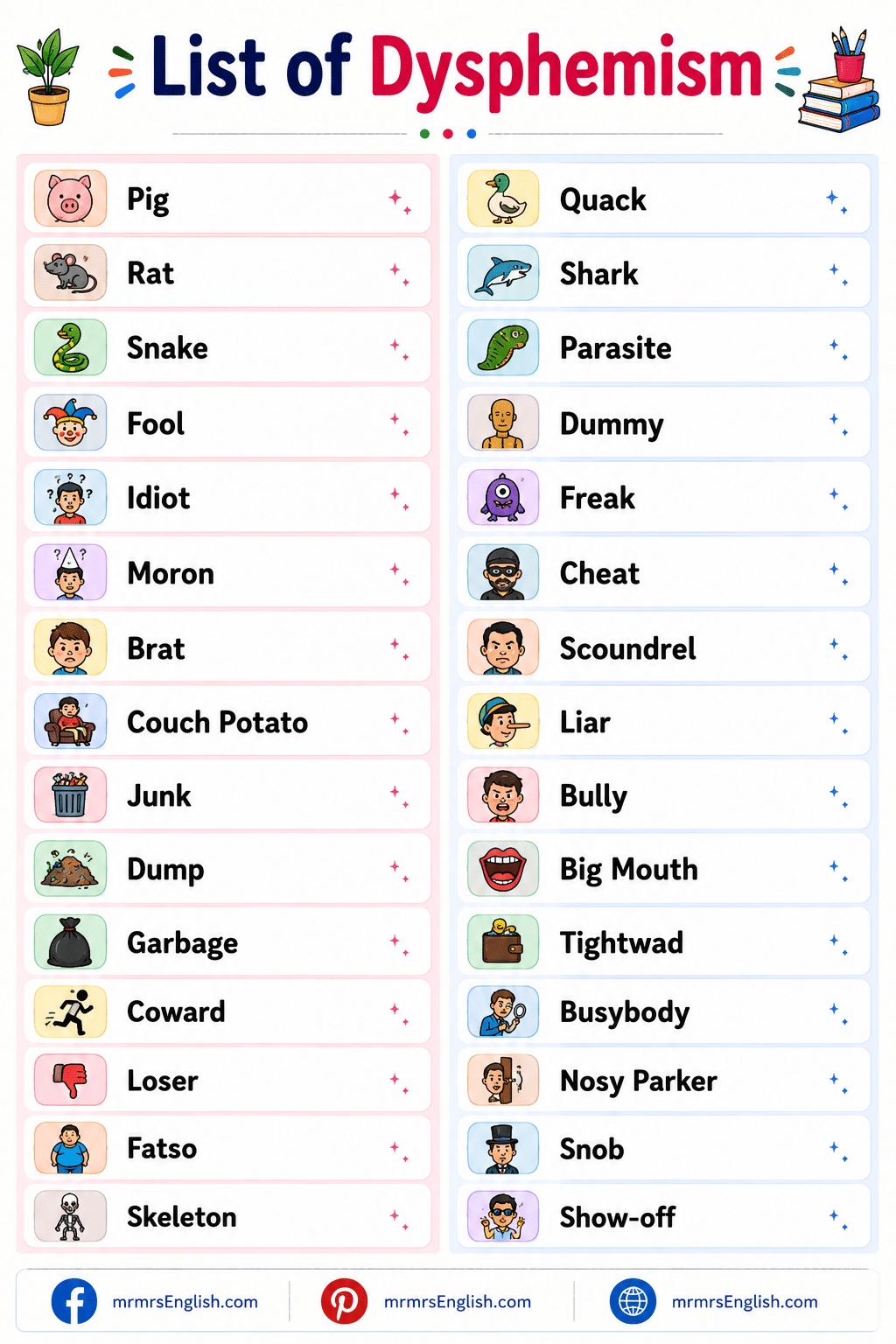
List of Dysphemism Words in English
Learn more helpful articles





Leave a Comment