

Adverbs of frequency are important words that tell us how often an action happens. Words like always, usually, sometimes, and never help make sentences more clear and meaningful in everyday communication. Understanding how to use these adverbs correctly can improve your grammar, writing, and speaking skills. They are commonly used in daily conversations, school assignments, and professional communication. In this article, you will learn how to master adverbs of frequency through clear explanations, practical examples, correct usage rules, and helpful worksheets that make learning easy and enjoyable for English learners.
What are Adverbs of Frequency?
The types of adverbs that tell us about the frequency of an activity.
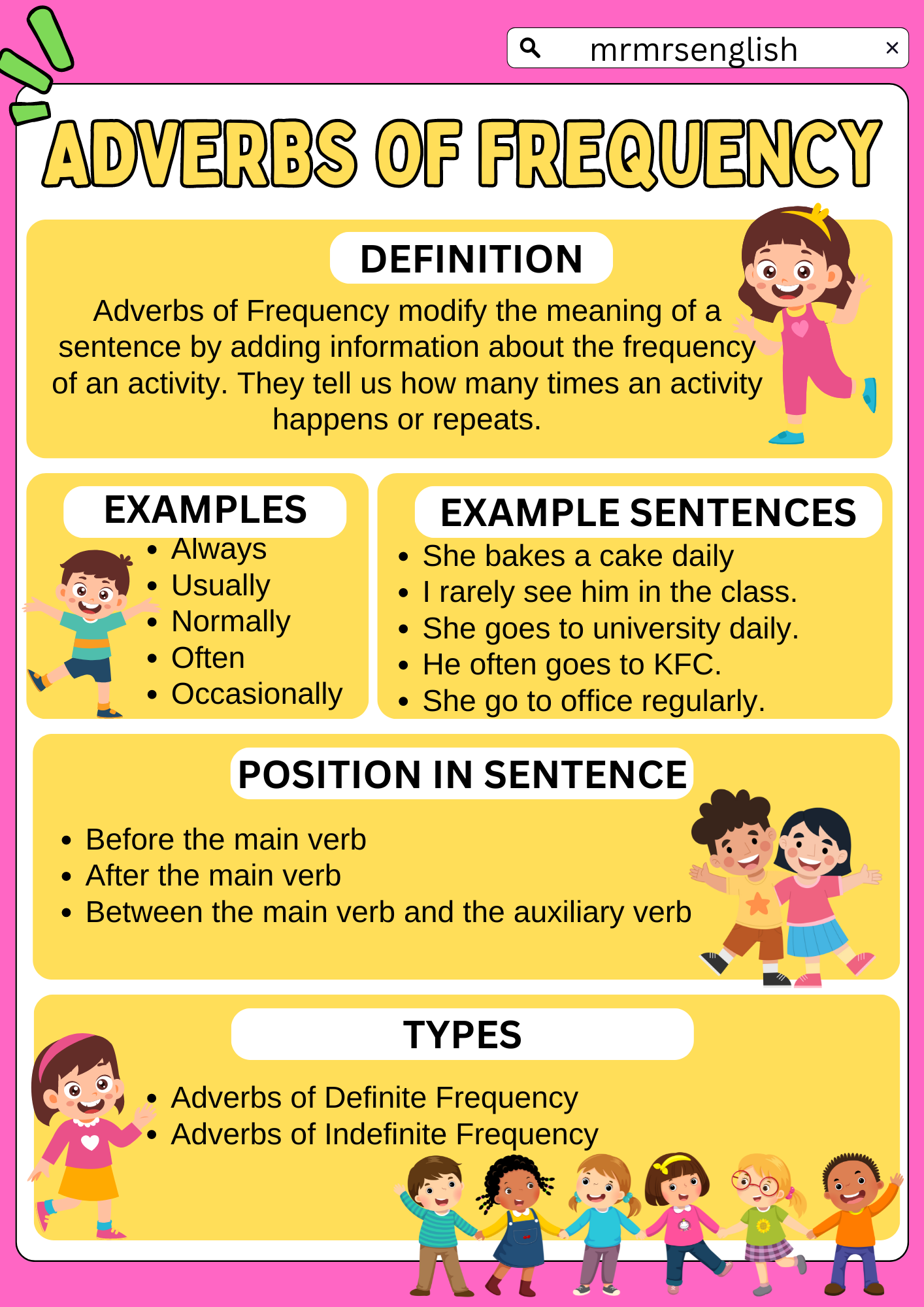
Definition
Adverbs of Frequency modify the meaning of a sentence by adding information about the frequency of an activity. They tell us how many times an activity happens or repeats.
Examples of Frequency of Adverb
- Always
- Usually
- Normally
- Often
- Sometimes
- Occasionally
- Never
How Often?
| Never | 0% |
| Rarely | 5% |
| Seldom | 10% |
| Occasionally | 30% |
| Sometimes | 50% |
| Often | 70% |
| Generally | 80% |
| Usually | 90% |
| Always | 100% |
Example Sentences
- She analyzes three product sheets weekly.
- She bakes a cake daily
- I rarely see him in the class.
- I usually got my morning classes missed.
- She goes to university daily.
- He often goes to KFC.
Usage of Adverbs of Frequency
- To indicate the number of times an activity happens
- To indicate the repeated activities or routine
- Position the adverb of frequency in the middle of a sentence, before the verb and after the subject, if there is only one verb in a sentence.
- Position the adverb of frequency before the main verb, if there is more than one verb in a sentence.
- They are positioned before the main verb in negative and interrogative sentences.
Position in sentence
- Before the main verb
- After the main verb
- Between the main verb and the auxiliary verb
Frequency of Adverb with Examples, Usage, and Worksheet
The Two Types of Adverbs of Frequency
These are:
Adverbs of Definite Frequency
It represents the exact time intervals of an activity. They represent the frequency of an action by mentioning the specific time.
Examples:
- He goes to school daily.
- They go to KFC weekly.
- She does groceries monthly.
- Our official dinners are held annually.
Adverbs of Indefinite Frequency
They do not represent the exact intervals for an activity or an action. They represent a general idea about the frequency of an action.
Examples:
- He usually finishes her tasks on time.
- He often goes to school early morning.
- He frequently goes for the morning walk.
- She usually goes to the academy.
Explore how to use them in a sentence.
Adverbs of Frequency List
- Annually
- Constantly
- Eventually
- Always
- Daily
- Ever
- Frequently
- Infrequently
- Generally
- Hourly
- Later
- Monthly
- Never
- Nightly
- Normally
- Next
- Now
- Often
- Quarterly
- Occasionally
- Rarely
- Yet
- Regularly
- Soon
- Then
- Sometimes
- Today
- Weekly
- Yearly
- Tonight
- Yesterday
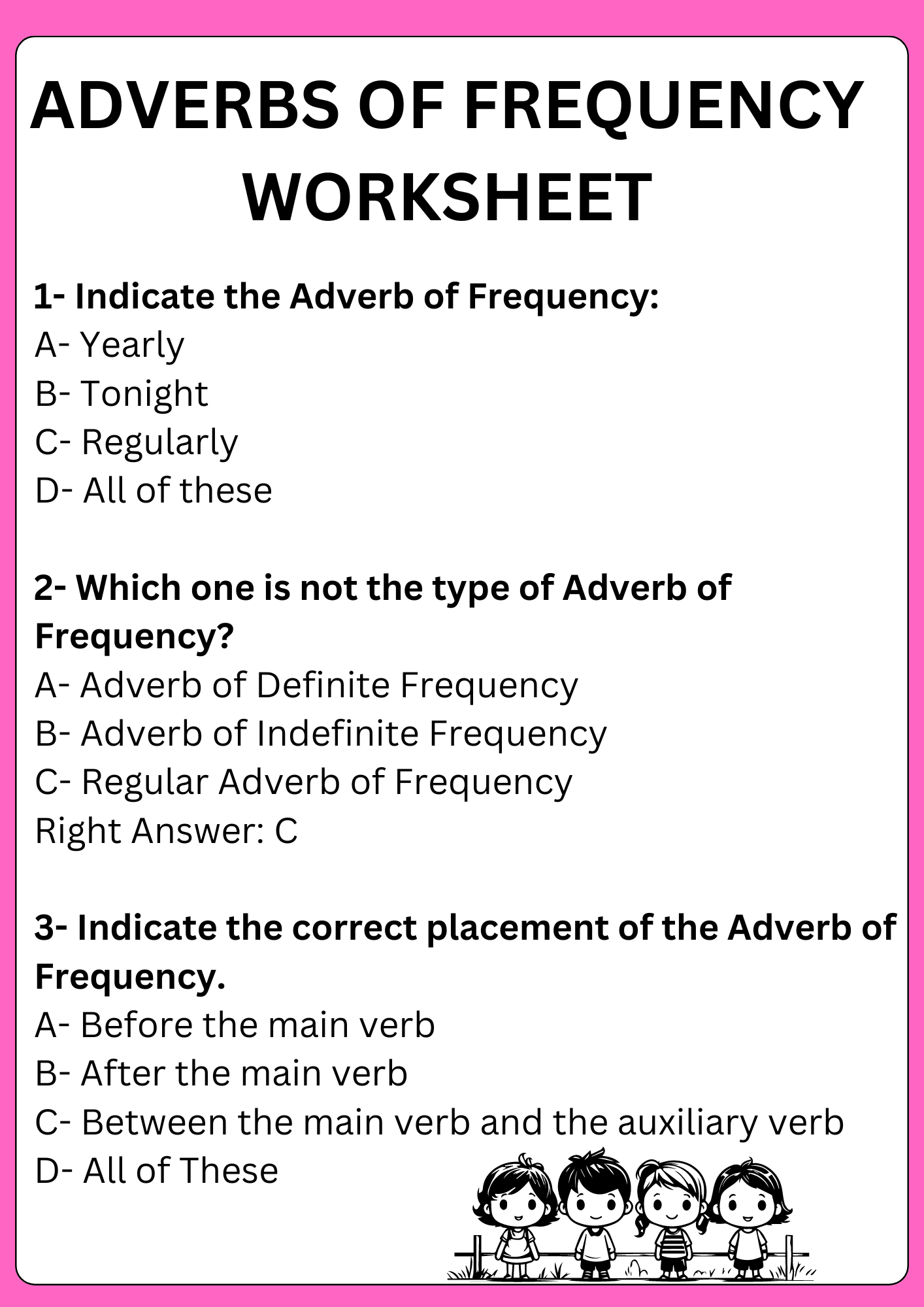
Worksheet for Adverbs of Frequency
1- Indicate the Adverb of Frequency:
- A- Yearly
- B- Tonight
- C- Regularly
- D- All of these
- Right Answer: D
2- Which one is not the type of Adverb of Frequency?
- A- Adverb of Definite Frequency
- B- Adverb of Indefinite Frequency
- C- Regular Adverb of Frequency
- D- All of these
Right Answer: C
3- Indicate the correct placement of the Adverb of Frequency.
- A- Before the main verb
- B- After the main verb
- C- Between the main verb and the auxiliary verb
- D- All of These
Right Answer: D
Worksheet for Adverbs of Frequency
Learn more helpful articles




Leave a Comment