
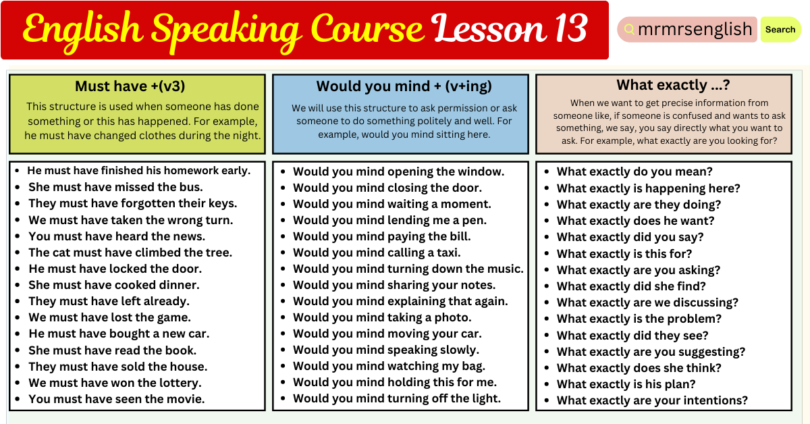
Learning English through sentence structures is one of the most effective ways to improve speaking skills and communicate with confidence. Sentence patterns help learners understand how to create correct and meaningful sentences for different situations. By practicing these structures regularly, you can improve your grammar, increase your vocabulary, and speak more naturally in everyday conversations. Each lesson introduces practical patterns that make learning easier and more organized. In this Lesson 13 of the English Speaking Course by Structures, you will learn useful sentence structures and examples that will help you develop greater fluency and confidence in spoken English.
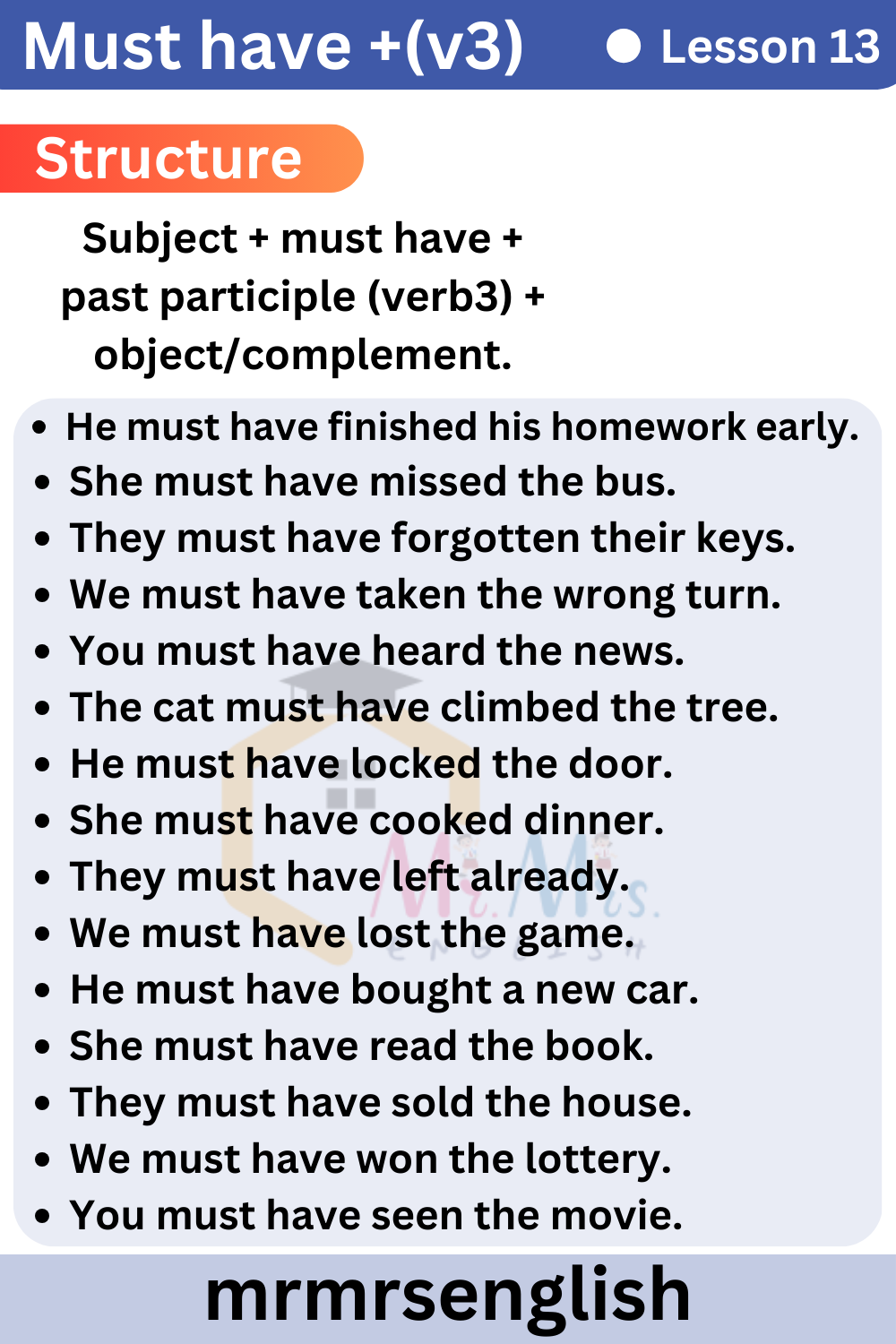
Must have +(v3)
This structure is used when someone has done something or this has happened. For example, he must have changed clothes during the night.
Structure: Subject + must have + past participle (verb3) + object/complement.
- He must have finished his homework early.
- She must have missed the bus.
- They must have forgotten their keys.
- We must have taken the wrong turn.
- You must have heard the news.
- The cat must have climbed the tree.
- He must have locked the door.
- She must have cooked dinner.
- They must have left already.
- We must have lost the game.
- He must have bought a new car.
- She must have read the book.
- They must have sold the house.
- We must have won the lottery.
- You must have seen the movie.
English Speaking Course Lesson 13 by Structures
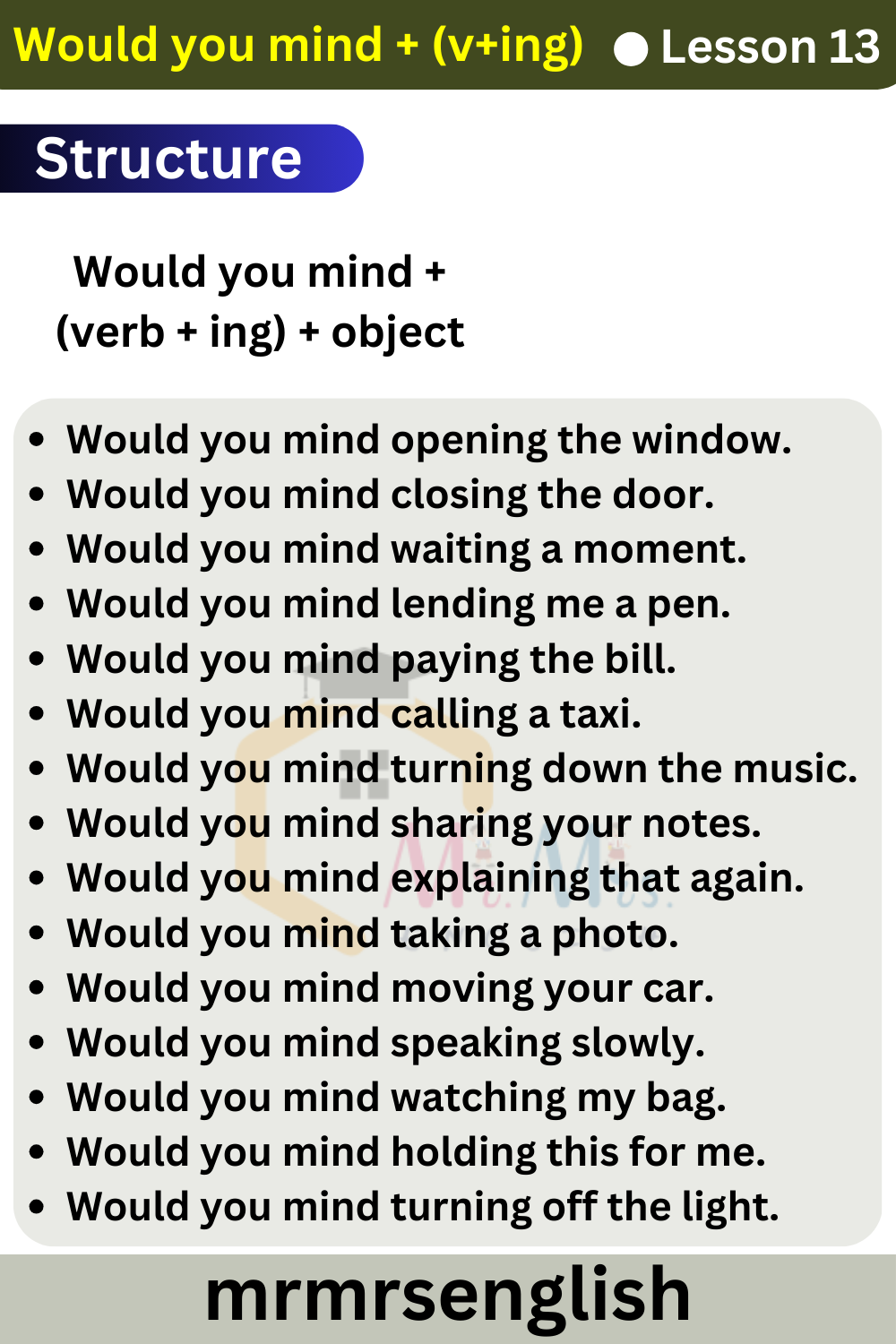
Would you mind + (v+ing)
We will use this structure to ask permission or ask someone to do something politely and well. For example, would you mind sitting here.
Structure: Would you mind + (verb + ing) + object
- Would you mind opening the window.
- Would you mind closing the door.
- Would you mind waiting a moment.
- Would you mind lending me a pen.
- Would you mind paying the bill.
- Would you mind calling a taxi.
- Would you mind turning down the music.
- Would you mind sharing your notes.
- Would you mind explaining that again.
- Would you mind taking a photo.
- Would you mind moving your car.
- Would you mind speaking slowly.
- Would you mind watching my bag.
- Would you mind holding this for me.
- Would you mind turning off the light.
English Speaking Course Lesson 13 by Structures
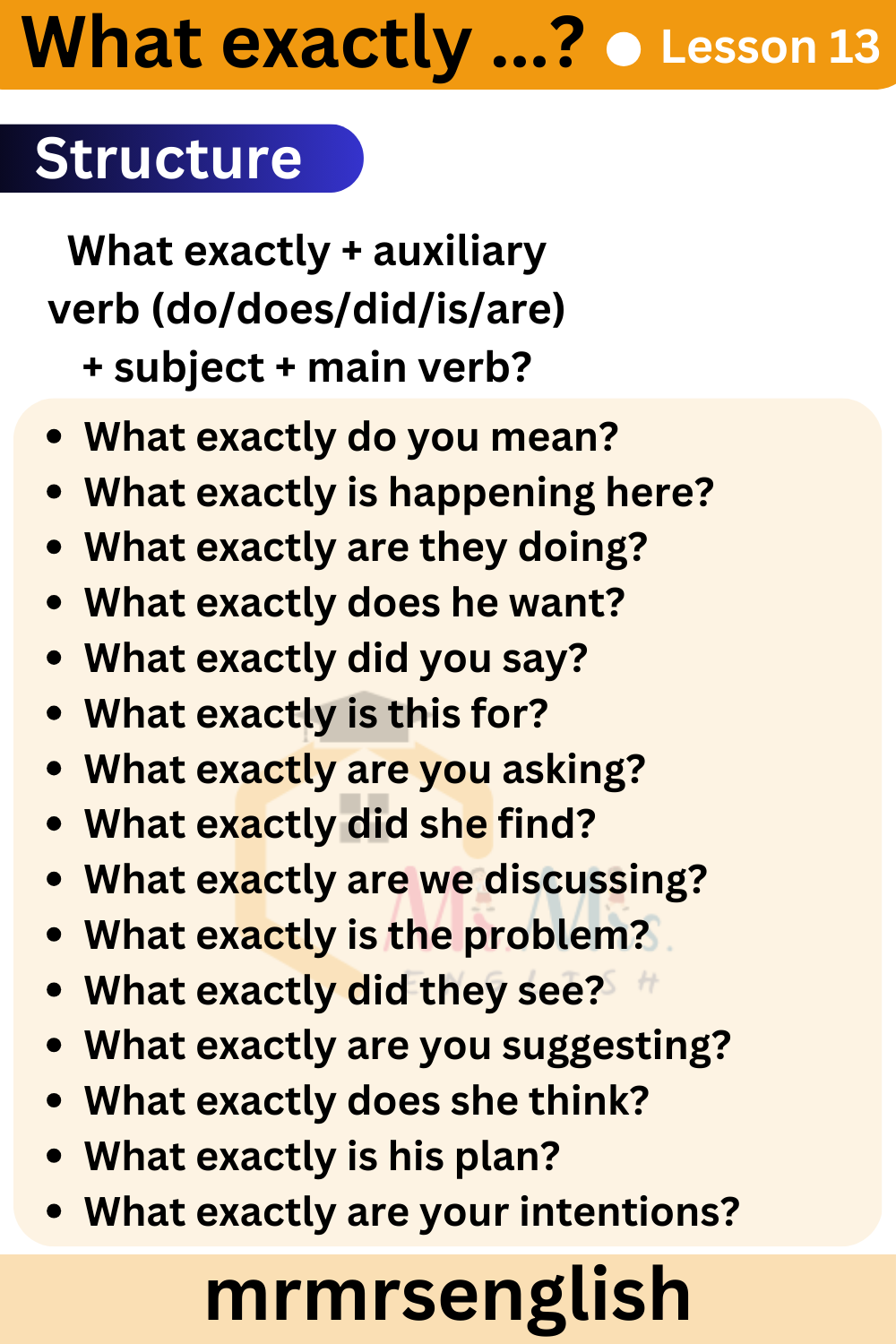
What exactly …?
When we want to get precise information from someone like, if someone is confused and wants to ask something, we say, you say directly what you want to ask. For example, what exactly are you looking for? what exactly is the problem?
Structure: What exactly + auxiliary verb (do/does/did/is/are) + subject + main verb?
- What exactly do you mean?
- What exactly is happening here?
- What exactly are they doing?
- What exactly does he want?
- What exactly did you say?
- What exactly is this for?
- What exactly are you asking?
- What exactly did she find?
- What exactly are we discussing?
- What exactly is the problem?
- What exactly did they see?
- What exactly are you suggesting?
- What exactly does she think?
- What exactly is his plan?
- What exactly are your intentions?
English Speaking Course Lesson 13 by Structures
Learn more helpful articles

Leave a Comment