
Learning English through sentence structures is a practical and effective way to improve speaking skills and build confidence in communication. Sentence patterns help learners understand how to create correct and meaningful sentences for everyday situations. Regular practice of these structures improves grammar, strengthens vocabulary, and makes speaking more natural and fluent. Each lesson introduces useful patterns that can be applied in real-life conversations and daily interactions. In this Lesson 12 of the English Speaking Course by Structures, you will learn practical sentence structures and examples that will help you speak English more accurately and confidently in everyday life.
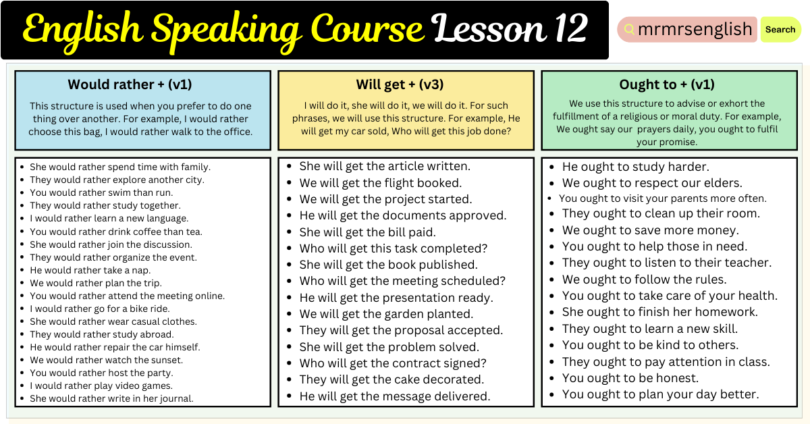
Use of Would rather + (v1)
This structure is used when you prefer to do one thing over another. For example, I would rather choose this bag; I would rather walk to the office.
Structure: Subject + would rather + (base form of the verb)
- She would rather spend time with family.
- They would rather explore another city.
- You would rather swim than run.
- They would rather study together.
- I would rather learn a new language.
- You would rather drink coffee than tea.
- She would rather join the discussion.
- They would rather organize the event.
- He would rather take a nap.
- We would rather plan the trip.
- You would rather attend the meeting online.
- I would rather go for a bike ride.
- She would rather wear casual clothes.
- They would rather study abroad.
- He would rather repair the car himself.
- We would rather watch the sunset.
- You would rather host the party.
- I would rather play video games.
- She would rather write in her journal.

English Speaking Course Lesson 12 by Structures
Use of Will get + (v3)
I will do it, she will do it, we will do it. For such phrases, we will use this structure. For example, He will get my car sold, Who will get this job done?
Structure: Subject + will get + object + past participle (V3)
- She will get the article written.
- We will get the flight booked.
- We will get the project started.
- He will get the documents approved.
- She will get the bill paid.
- Who will get this task completed?
- She will get the book published.
- Who will get the meeting scheduled?
- He will get the presentation ready.
- We will get the garden planted.
- They will get the proposal accepted.
- She will get the problem solved.
- Who will get the contract signed?
- They will get the cake decorated.
- He will get the message delivered.

English Speaking Course Lesson 12 by Structures
Use of f Ought to + (v1)
We use this structure to advise or exhort the fulfillment of a religious or moral duty. For example, We ought to say our prayers daily, you ought to fulfill your promise.
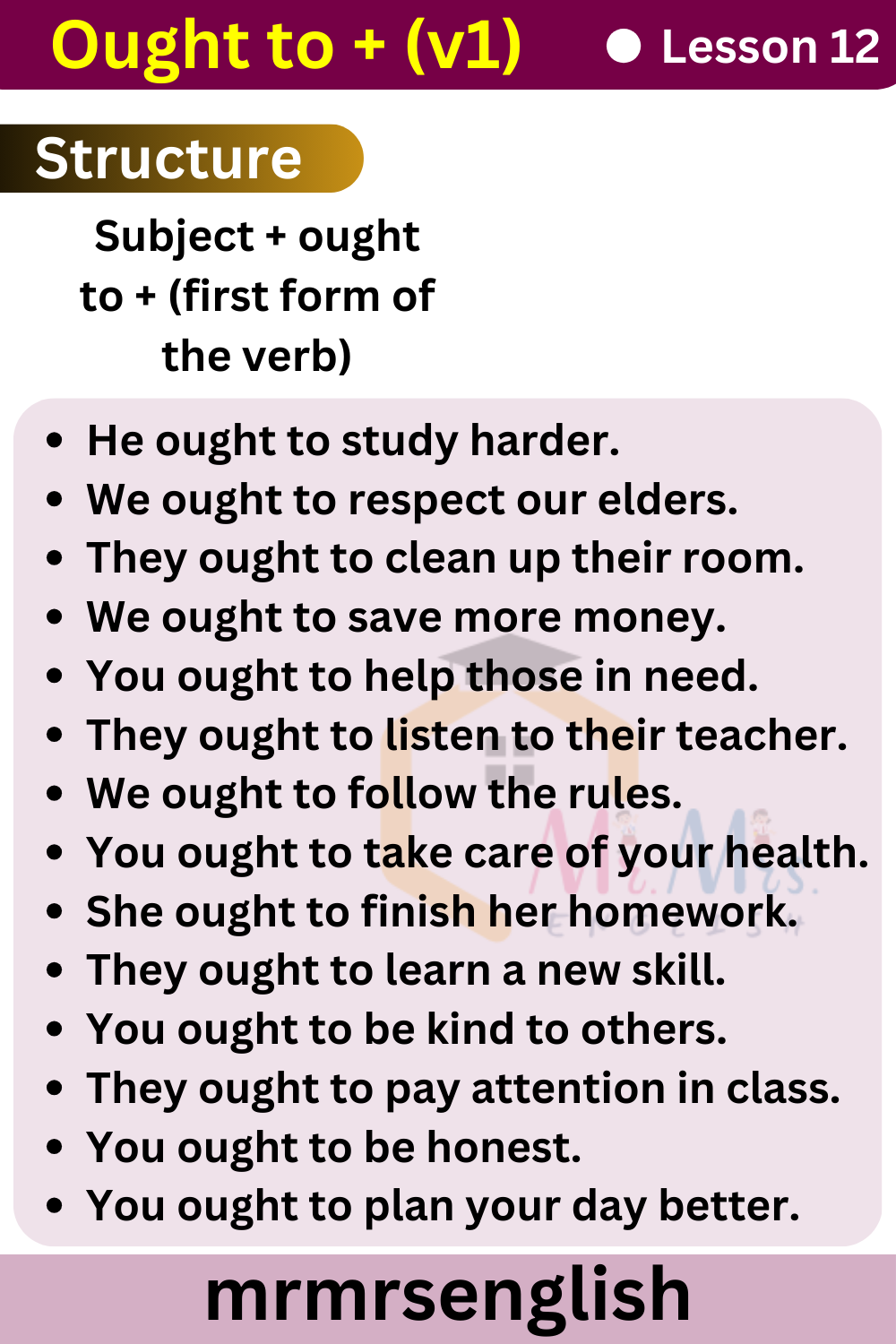
Structure: Subject + ought to + (base form of the verb)
- He ought to study harder.
- We ought to respect our elders.
- You ought to visit your parents more often.
- They ought to clean up their room.
- We ought to save more money.
- You ought to help those in need.
- They ought to listen to their teacher.
- We ought to follow the rules.
- You ought to take care of your health.
- She ought to finish her homework.
- They ought to learn a new skill.
- You ought to be kind to others.
- They ought to pay attention in class.
- You ought to be honest.
- You ought to plan your day better.
English Speaking Course Lesson 12 by Structures
Learn more helpful articles

Leave a Comment