
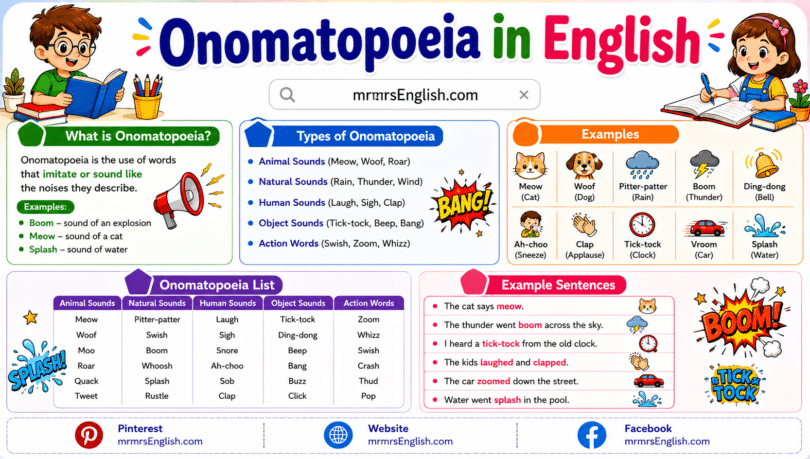
What Is Onomatopoeia?
Onomatopoeia happens when a word sounds like the action or noise it describes. These words copy real-life sounds such as animals, objects, nature, and human actions.
Simple Examples:
- Buzz (sound of a bee)
- Bang (loud noise)
- Splash (sound of water)
- Tick-tock (clock sound)
In Sentences:
- The bee made a buzz sound.
- The door closed with a loud bang.
Easy Meaning of Onomatopoeia
Onomatopoeia means using words that sound like real noises to make language more vivid and realistic.
Why Is Onomatopoeia Important?
Onomatopoeia plays an important role in English learning.
Main Benefits:
- Makes writing more lively and descriptive
- Helps readers imagine sounds
- Improves storytelling skills
- Makes language fun and engaging
- Useful in poetry and creative writing
- Helps children and ESL learners understand sounds easily
Common Examples of Onomatopoeia in English
Animal Sounds
| Word | Sound |
|---|---|
| Bark | Dog sound |
| Meow | Cat sound |
| Moo | Cow sound |
| Roar | Lion sound |
| Chirp | Bird sound |
Nature Sounds
| Word | Sound |
|---|---|
| Splash | Water |
| Boom | Thunder |
| Crack | Breaking sound |
| Rustle | Leaves moving |
| Drip | Water falling |
Human Sounds
| Word | Sound |
|---|---|
| Laugh | Ha ha |
| Cry | Sob |
| Sneeze | Achoo |
| Whisper | Soft voice |
| Giggle | Light laugh |
Object Sounds
| Word | Sound |
|---|---|
| Tick-tock | Clock |
| Ding-dong | Bell |
| Click | Button |
| Buzz | Machine |
| Bang | Explosion |
Types of Onomatopoeia
1. Direct Onomatopoeia
Words that clearly imitate real sounds.
Examples:
- Buzz
- Boom
- Hiss
2. Indirect Onomatopoeia
Words that suggest sound through description.
Examples:
- Rustling leaves
- Murmuring water
Onomatopoeia in Sentences
Basic Examples:
- The clock goes tick-tock.
- The dog barked woof woof.
Intermediate Examples:
- The rain went pitter-patter on the roof.
- The bees were buzzing around the flowers.
Advanced Examples:
- The thunder boomed across the sky.
- The leaves rustled softly in the wind.
Onomatopoeia in Literature
Writers use onomatopoeia to make scenes more real.
Example:
- The fire crackled in the night.
This helps the reader hear the sound of fire.
Onomatopoeia in Daily Life
You use these words without thinking:
- Phone goes ring ring
- Door goes knock knock
- Water goes drip drip
Onomatopoeia vs Other Sound Devices
| Device | Meaning | Example |
|---|---|---|
| Onomatopoeia | Imitates sound | buzz |
| Alliteration | Same starting sound | big bear |
| Assonance | Vowel sound repetition | light sky |
| Consonance | Consonant repetition | best test |
How to Use Onomatopoeia
Tips:
- Choose words that match real sounds
- Use them in storytelling
- Do not overuse
- Keep sentences natural
- Practice with daily examples
Onomatopoeia for ESL Students
Onomatopoeia helps learners:
- Improve pronunciation
- Understand sound-based vocabulary
- Enjoy learning English
- Build creative writing skills
- Learn faster through sound association
Common Onomatopoeia Words List
| Word | Meaning |
|---|---|
| Buzz | Bee sound |
| Bang | Loud noise |
| Splash | Water sound |
| Crack | Breaking sound |
| Hiss | Snake sound |
| Roar | Lion sound |
| Chirp | Bird sound |
| Tick | Clock sound |
| Click | Press sound |
| Boom | Explosion |
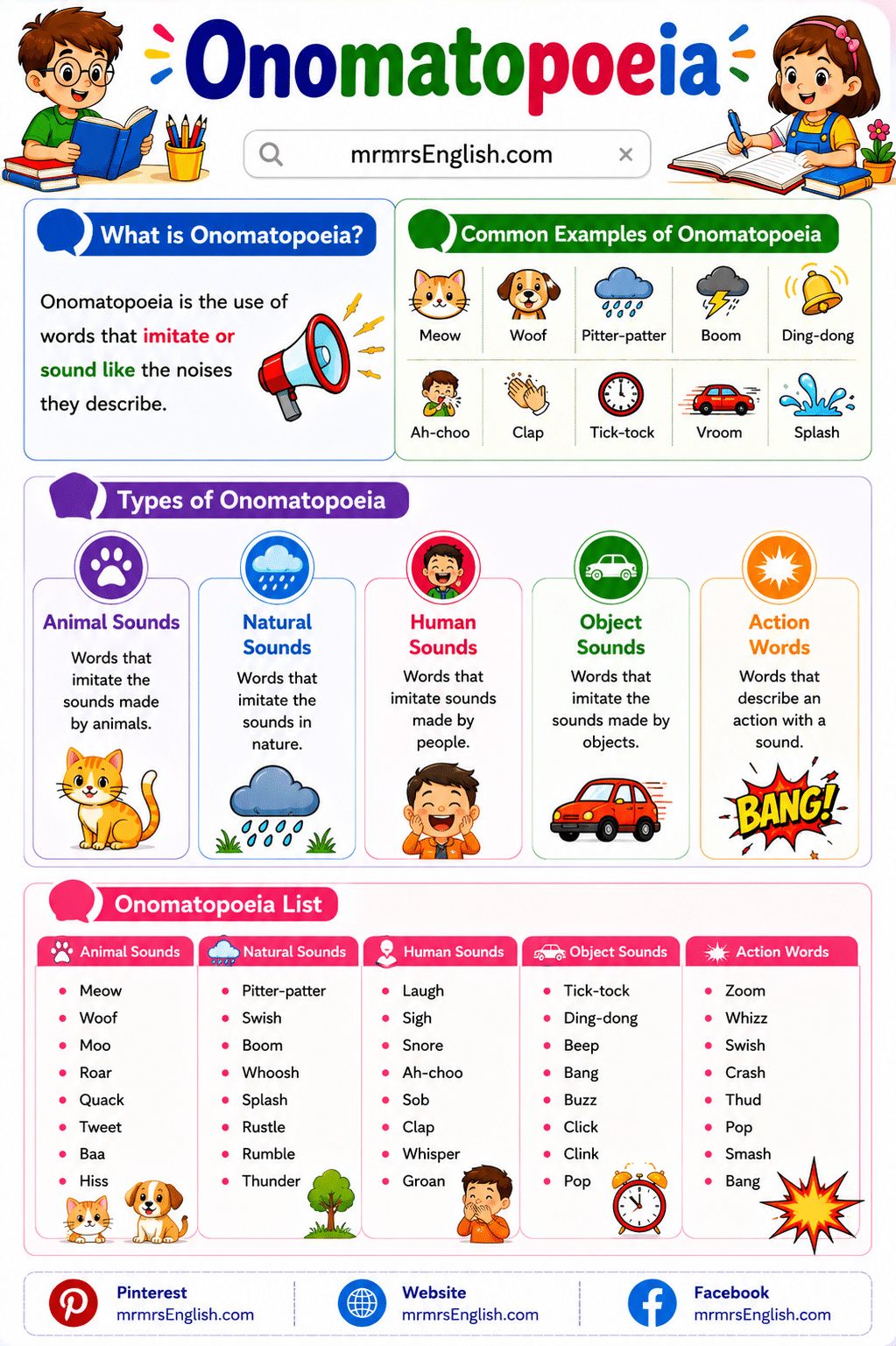
What Is Onomatopoeia? Meaning and Examples
Common Mistakes to Avoid
1. Using Wrong Sound Word
❌ The dog said meow
✔ The dog said bark
2. Overusing Onomatopoeia
Too many sound words can make writing confusing.
3. Using in Formal Writing
Avoid excessive use in academic writing.
Practice Exercise
Identify the onomatopoeia word:
- The bee buzzed loudly.
- The door made a bang.
- The clock ticked slowly.
- The water splashed everywhere.
- The snake hissed softly.
Answers:
- buzzed
- bang
- ticked
- splashed
- hissed
Quick Revision Table
| Word | Sound |
|---|---|
| Buzz | Bee |
| Bang | Loud noise |
| Splash | Water |
| Roar | Lion |
| Tick-tock | Clock |
Learn more helpful articles


Leave a Comment