
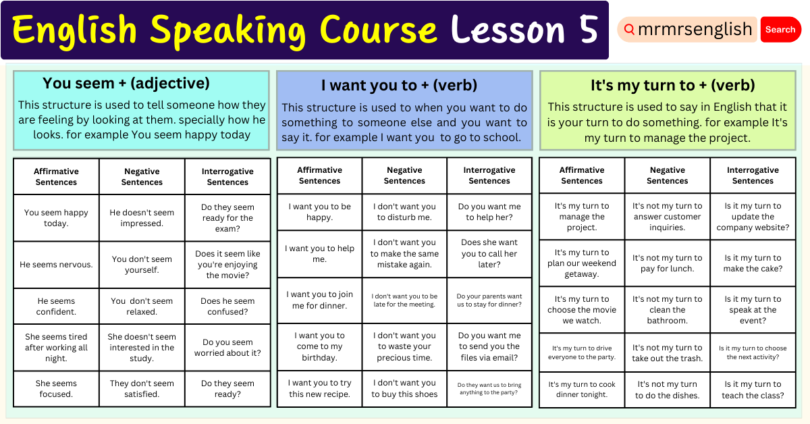
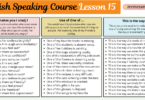
English Speaking Course Lesson 5 by Structures is designed to help learners improve their spoken English by practicing simple and useful sentence patterns. Instead of learning difficult grammar rules, this lesson focuses on structures that are commonly used in everyday conversations. Each structure is explained with clear examples, making it easier to understand and remember. Whether you are a beginner or looking to build confidence in speaking English, this lesson will help you develop better communication skills and use English more naturally in daily life.
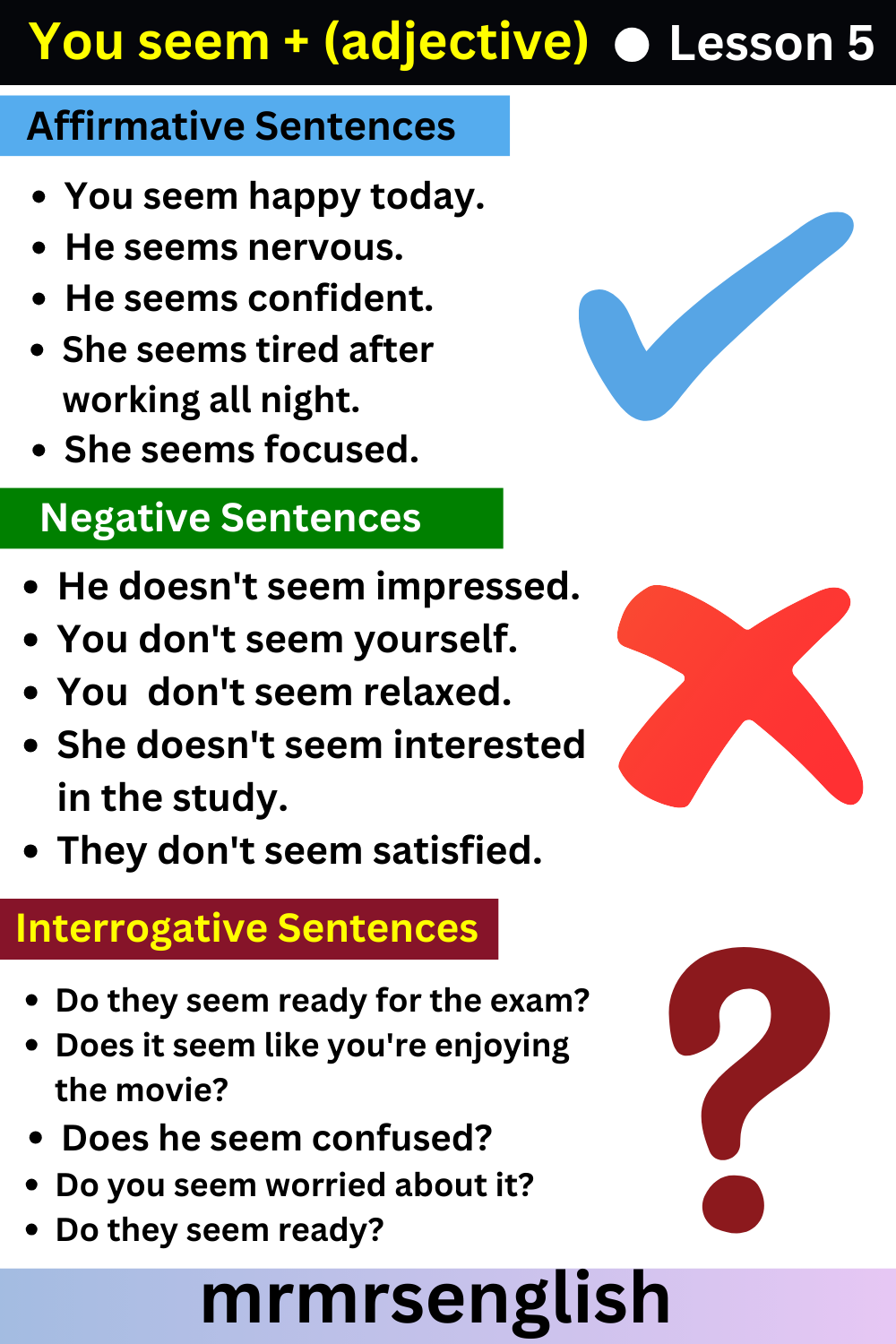
Use of You seem + (adjective):
This structure is used to tell someone how they are feeling by looking at them. especially how they look by feelings. for example, You seem happy today and He doesn’t seem impressed.
Formulas
- Affirmative Sentences: You/she + seem(s) + adjective/adverb
- Negative Sentences: You/she + don’t/doesn’t + seem + adjective/adverb.
- Interrogative Sentences: Do/Does + you/she + seem + adjective/adverb +?
| Affirmative Sentences | Negative Sentences | Interrogative Sentences |
| You seem happy today. | He doesn’t seem impressed. | Do they seem ready for the exam? |
| He seems nervous. | You don’t seem yourself. | Does it seem like you’re enjoying the movie? |
| He seems confident. | You don’t seem relaxed. | Does he seem confused? |
| She seems tired after working all night. | She doesn’t seem interested in the study. | Do you seem worried about it? |
| She seems focused. | They don’t seem satisfied. | Do they seem ready? |
I want you to + (verb):
This structure is used when you want to do something to someone else and you want to say it. for example, I want you to go to school.
Formulas
- Affirmative Sentences: I + want + object + to + verb.
- Negative Sentences: I + don’t want” + object + to + verb.
- Interrogative Sentences: Do/Does + she/ I + want + object + to + verb +?
| Affirmative Sentences | Negative Sentences | Interrogative Sentences |
| I want you to be happy. | I don’t want you to disturb me. | Do you want me to help her? |
| I want you to help me. | I don’t want you to make the same mistake again. | Does she want you to call her later? |
| I want you to join me for dinner. | I don’t want you to be late for the meeting. | Do your parents want us to stay for dinner? |
| I want you to come to my birthday. | I don’t want you to waste your precious time. | Do you want me to send you the files via email? |
| I want you to try this new recipe. | I don’t want you to buy these shoes. |

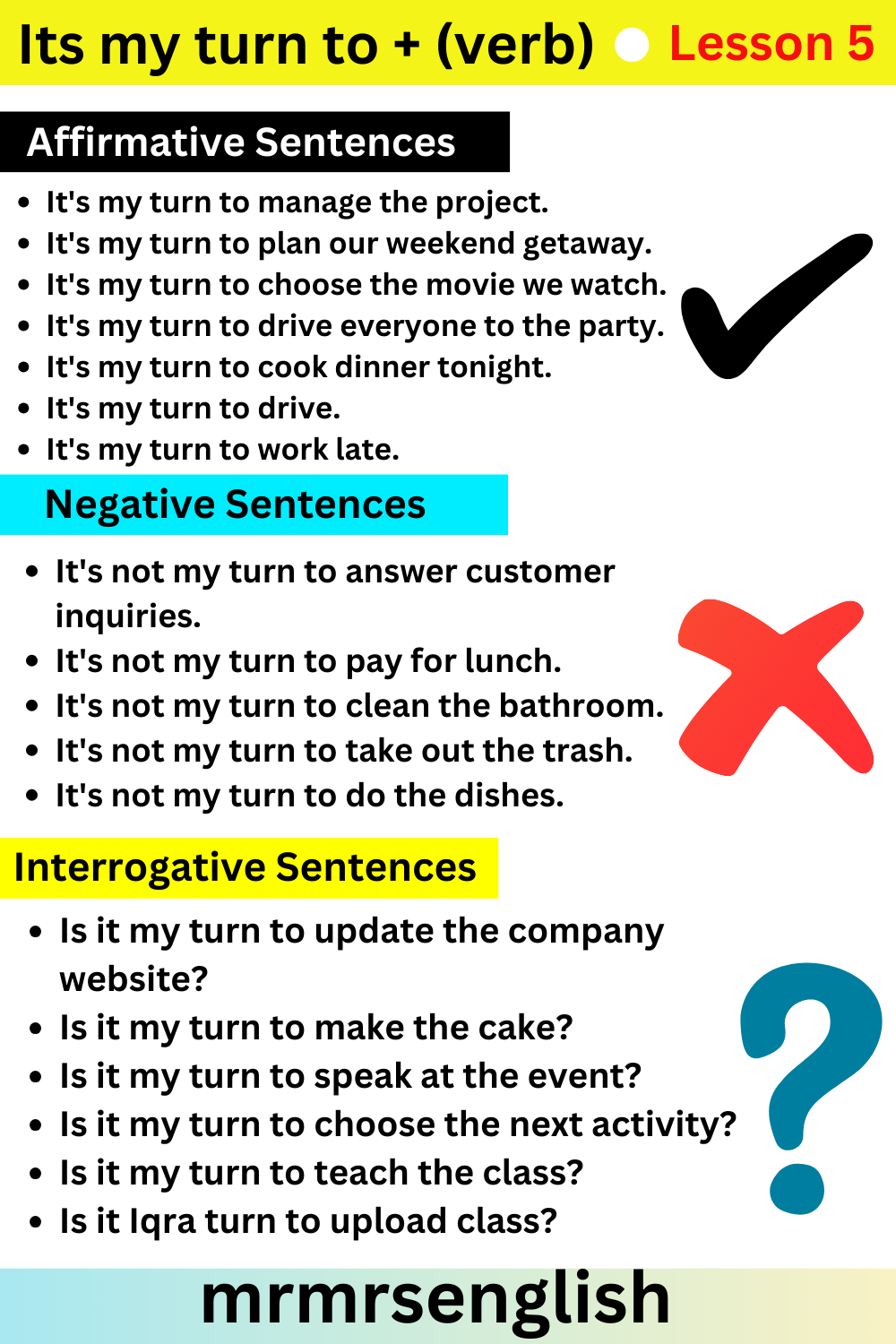
It’s my turn to + (verb):
This structure is used to say in English that it is your turn to do something. for example, It’s my turn to manage the project.
Formulas
- Affirmative Sentences: It’s my turn + to + verb phrase.
- Negative Sentences: It’s + not + my turn + to + verb phrase.
- Interrogative Sentences: Is + it + my turn + to + verb phrase +?
| Affirmative Sentences | Negative Sentences | Interrogative Sentences |
| It’s my turn to manage the project. | It’s not my turn to answer customer inquiries. | Is it my turn to update the company website? |
| It’s my turn to plan our weekend getaway. | It’s not my turn to pay for lunch. | Is it my turn to make the cake? |
| It’s my turn to choose the movie we watch. | It’s not my turn to clean the bathroom. | Is it my turn to speak at the event? |
| It’s my turn to drive everyone to the party. | It’s not my turn to take out the trash. | Is it my turn to choose the next activity? |
| It’s my turn to cook dinner tonight. | It’s not my turn to do the dishes. | Is it my turn to teach the class? |
English Speaking Course Lesson 5 by Structures
Learn more helpful articles

Leave a Comment