
Learning English becomes easier when you learn useful sentence structures instead of memorizing long grammar rules. English Speaking Course Lesson 9 by Structures introduces practical patterns that help you build correct and natural English sentences for everyday conversations. These easy structures can be used in common situations such as asking questions, sharing opinions, making requests, and expressing your ideas with confidence. With regular practice, you will improve your speaking skills, increase your vocabulary naturally, and become more fluent in real-life communication. This lesson is designed to help learners speak English clearly, correctly, and confidently in daily life.
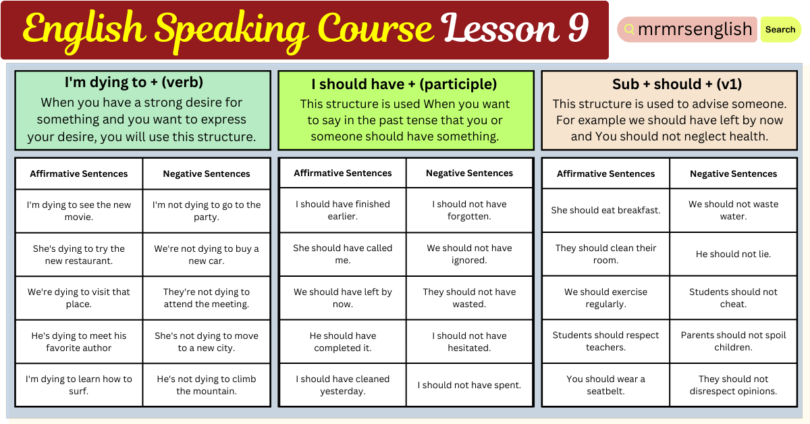
I’m dying to + (verb):
When you have a strong desire for something and you want to express your desire, you will use this structure. For example, He’s dying to start his new job.
- Affirmative Sentences: Subject + am/is/are + dying to + (verb)
- Negative Sentences: Subject + am/is/are + not + dying to + (verb)
| Affirmative Sentences | Negative Sentences |
| I’m dying to see the new movie. | I’m not dying to go to the party. |
| She’s dying to try the new restaurant. | We’re not dying to buy a new car. |
| We’re dying to visit that place. | They’re not dying to attend the meeting. |
| He’s dying to meet his favorite author | She’s not dying to move to a new city. |
| I’m dying to learn how to surf. | He’s not dying to climb the mountain. |

English Speaking Course Lesson 9 by Structures
I should have + (participle):
This structure is used When you want to say in the past tense that you or someone should have something. For example, He should have completed the project by yesterday.
- Affirmative Sentences: Subject + should have + past participle
- Negative Sentences: Subject + should not have + past participle
| Affirmative Sentences | Negative Sentences |
| I should have finished earlier. | I should not have forgotten. |
| She should have called me. | We should not have ignored it. |
| We should have left by now. | They should not have wasted. |
| He should have completed it. | I should not have hesitated. |
| I should have cleaned it yesterday. | I should not have spent. |

English Speaking Course Lesson 9 by Structures
Sub + should + (v1):
This structure is used to advise someone. For example, we should have left by now and You should not neglect health.
- Affirmative Sentences: Subject + should + base form of the verb
- Negative Sentences: Subject + should not + base form of the verb
| Affirmative Sentences | Negative Sentences |
| She should eat breakfast. | We should not waste water. |
| They should clean their room. | He should not lie. |
| We should exercise regularly. | Students should not cheat. |
| Students should respect teachers. | Parents should not spoil children. |
| You should wear a seatbelt. | They should not disrespect opinions. |

English Speaking Course Lesson 9 by Structures
Read Also:

Leave a Comment